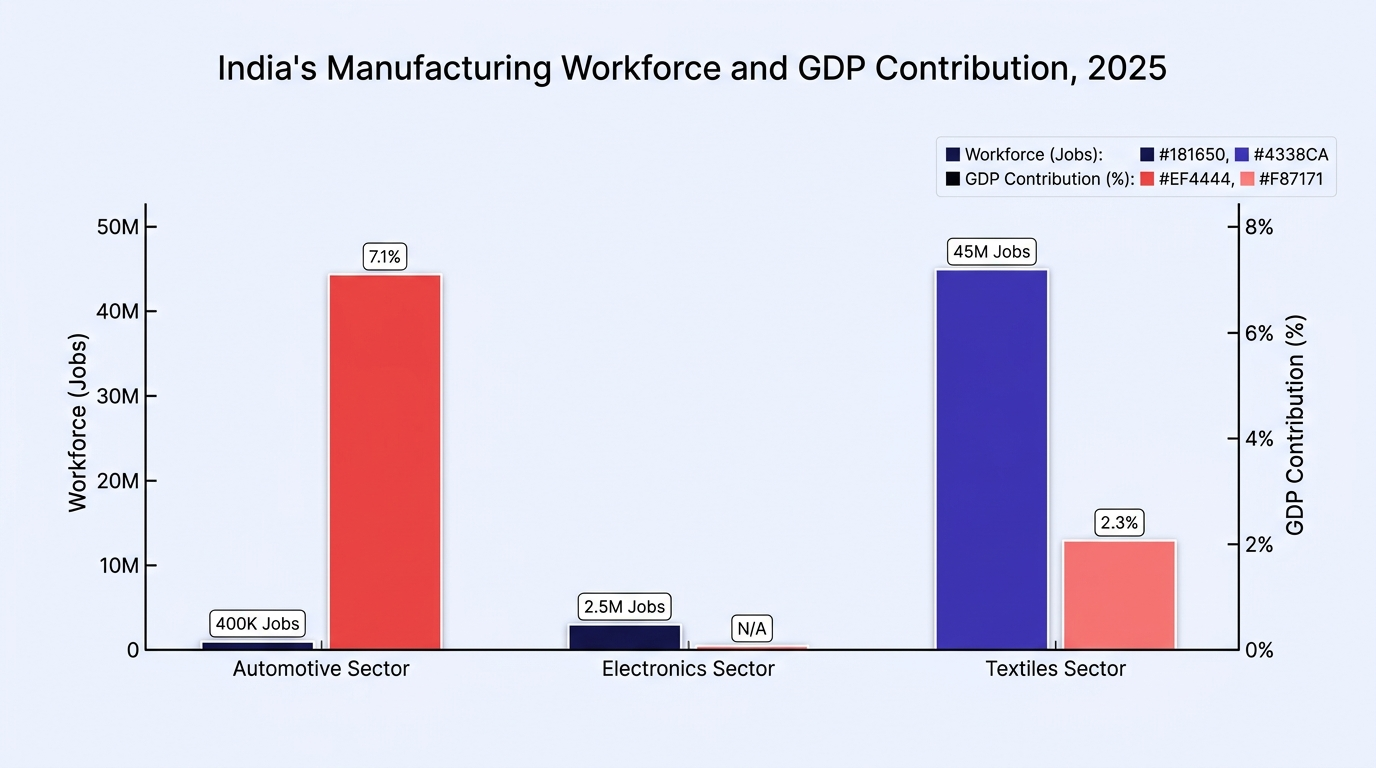
Workforce Models in Indian Manufacturing: 2025.
Automation JobsFlexible WorkforceIndustry 4.0Manufacturing IndiaSkill Shift
This report explores the transformation of India’s manufacturing workforce driven by automation, digital integration, and government initiatives. It highlights the shift towards high-tech, sustainable manufacturing practices and the emergence of new workforce models. The report delves into sectoral impacts, focusing on industries like automotive, electronics, textiles, and heavy engineering. Challenges such as digital skill disparities, gender inclusion, and MSME constraints are analyzed, alongside strategic recommendations for a future-ready manufacturing workforce.
Rakshit Badyal, Ghost Research
December 2025
Perspective.
PurposeTo analyze workforce transformation in India's manufacturing sector due to automation and digital trends.
AudiencePolicy makers, industry leaders, and human resource strategists in manufacturing.
Special EmphasisEmphasis on automation, sustainability, and government policy influences.
55Pages of Deep Analysis
130Curated Credible Sources
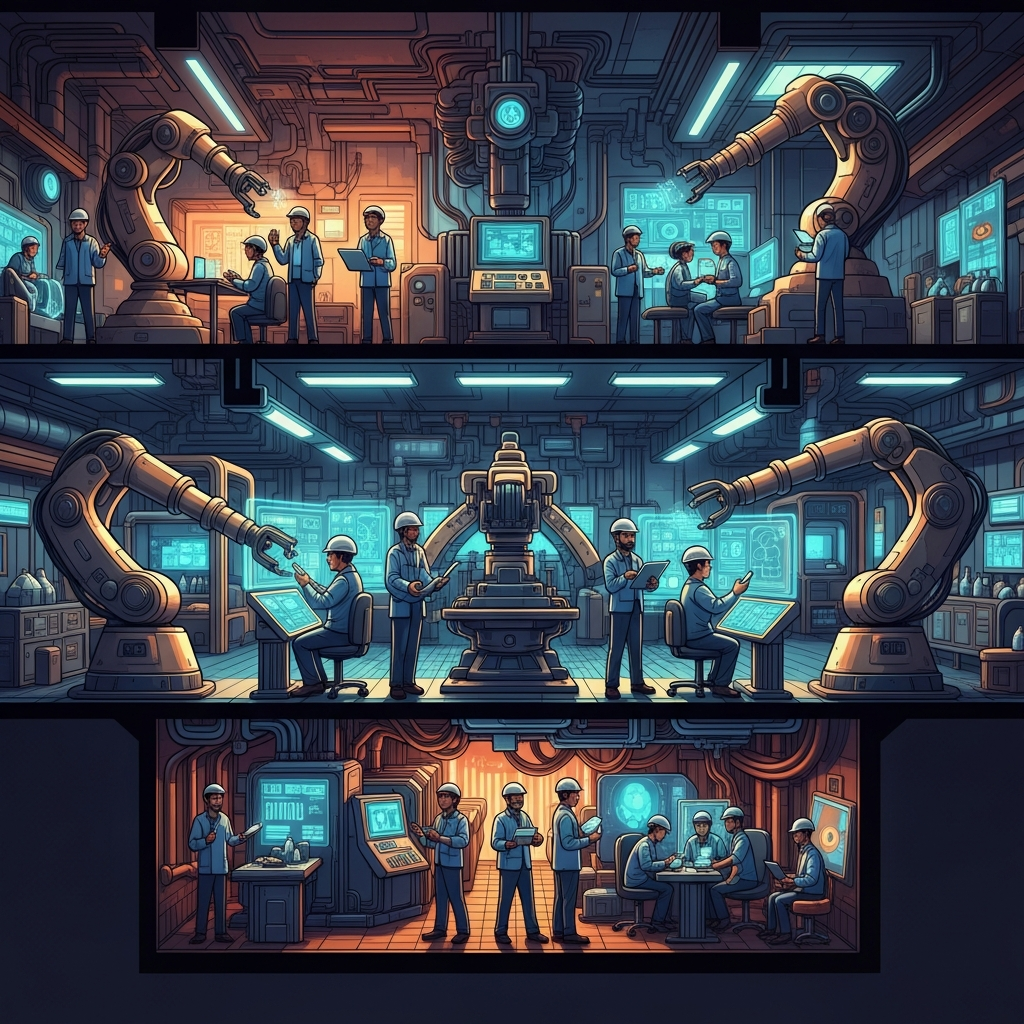
4Proprietary AI Visuals
7Data Analysis Tables
$495

Rakshit Badyal
1+ Years of Experience
Sectors & Industries
IndustrialsInformation Technology
Functions & Expertise
Market Intelligence
Have questions? Our Research Desk is here to help
Top Insights.
Shift towards automation and digital integration is reshaping work roles in manufacturing.Government policies like PLI are driving substantial job creation and skill requirements.India lags behind global leaders in automation and digital skills.Gender diversity and equitable technology access remain significant challenges.MSMEs face barriers in adopting automation due to financial and technical constraints.Key Questions Answered.
55Pages of Deep Analysis
4Proprietary AI Visuals
130Curated Credible Sources
7Data Analysis Tables
Summary.