Southeast Asia Supply Chains 2026.
GeopoliticsIndustrialsRisilienceRiskRisk ManagementSupply Chains
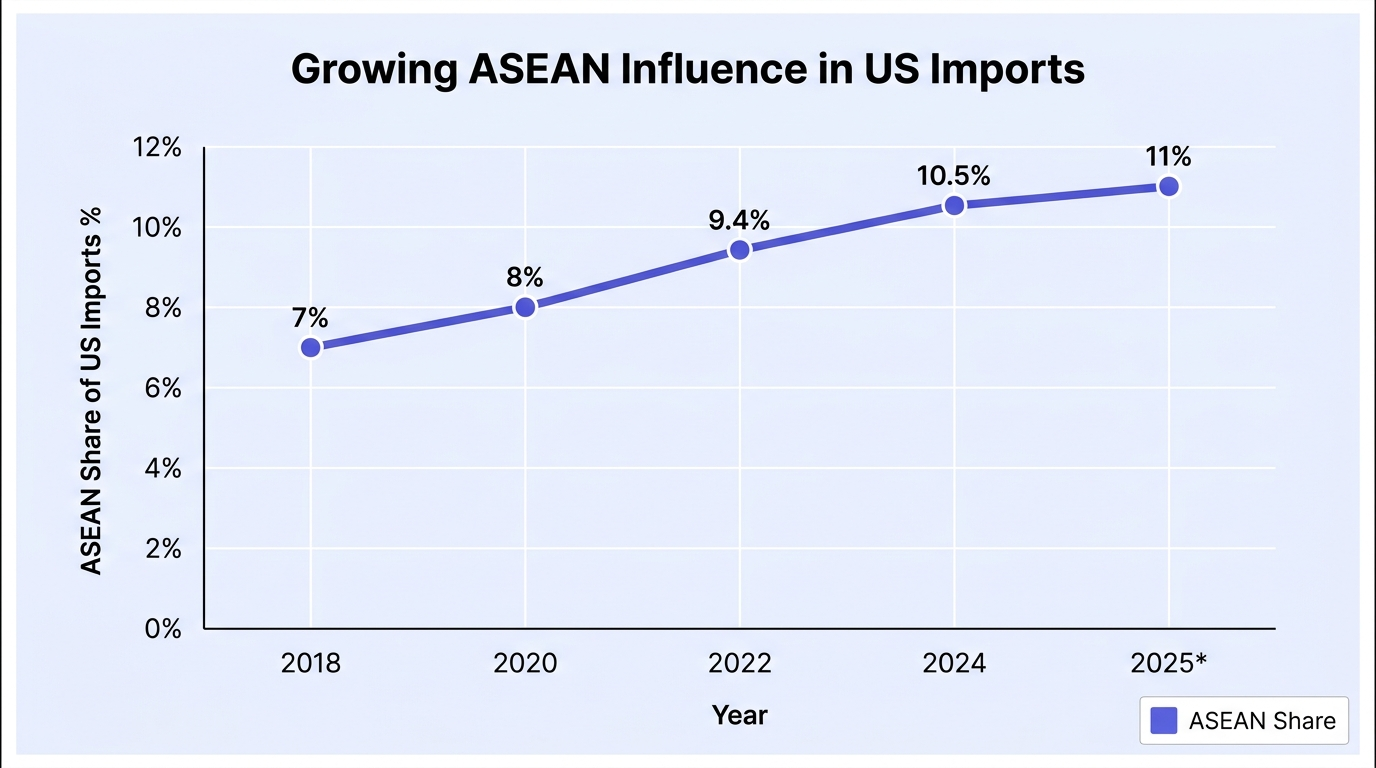
The report explores the restructuring of Southeast Asian supply chains by 2026, focusing on the geopolitical drivers such as US-China tensions and regional trade realignment. It evaluates risk assessment frameworks and resilience strategies to ensure stability and growth within ASEAN. Key areas include the effects of regulatory shifts, the role of Gulf sovereign funds, and technological advancements in supply chain management. The report underscores the importance of diversification and sustainability for investment in the region.
Dr. Supreena Narayanan, Ghost Research
January 2026
Perspective.
PurposeTo examine geopolitical impacts, risk assessments, and resilience strategies for Southeast Asian supply chains.
AudienceBusiness leaders, investors, policy makers, and supply chain managers.
Special EmphasisSustainability, geopolitical strategies, and technological innovation.

57Pages of Deep Analysis
86Curated Credible Sources
7Proprietary AI Visuals
13Data Analysis Tables
$495

Dr. Supreena Narayanan
20+ Years of Experience
Sectors & Industries
Information TechnologyCommunication Services
Functions & Expertise
Marketing & GrowthContent & Communication
Have questions? Our Research Desk is here to help
Top Insights.
ASEAN is becoming a pivotal hub in global supply chains due to geopolitical shifts.Geopolitical drivers include US-China tensions and strategic diversification within ASEAN.Increasing transport and logistics improvements are crucial for trade facilitation.The report highlights the need for robust risk management frameworks in the supply chain.Southeast Asia's role supports investment in sustainable supply chain assets and infrastructure.Key Questions Answered.
57Pages of Deep Analysis
7Proprietary AI Visuals
86Curated Credible Sources
13Data Analysis Tables
Summary.