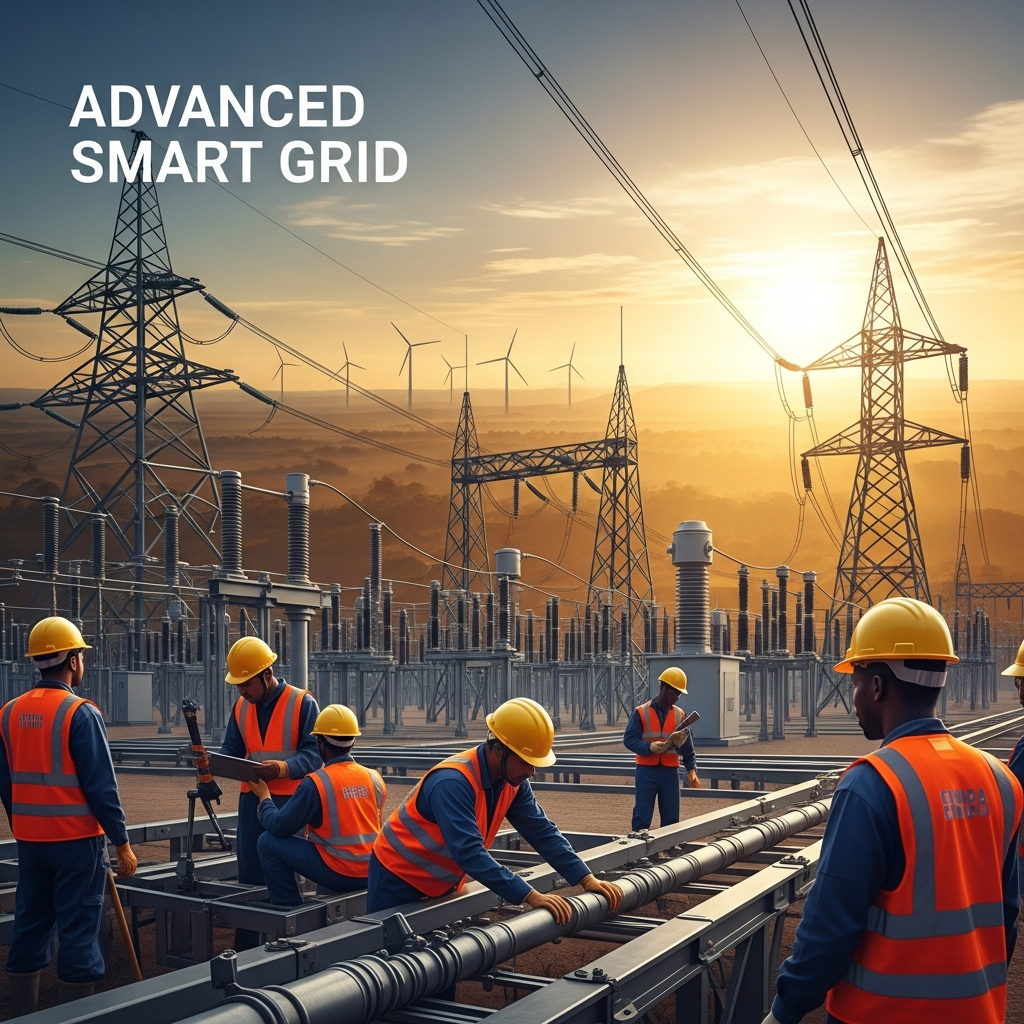
Smart-Grid Roll-Out in Africa.
AI IntegrationDecentralized EnergyGreen Jobs AfricaRenewable EnergySmart-Grid AfricaUtility TransformationWorkforce Development
The report explores workforce development and employment models for smart-grid implementations in Africa. It covers the technological landscape, emphasizing the expansion of solar capacity and mini-grids. It addresses regional disparities in skills and highlights the importance of reskilling and localized talent development. Furthermore, the report discusses investment strategies to support workforce readiness, emphasizing public-private partnerships and the potential impacts of AI and decentralization on job roles.
Aayush Tayal, Ghost Research
December 2025
Perspective.
PurposeTo provide actionable insights into workforce development and employment strategies for smart-grid technologies in Africa.
AudienceEnergy companies, utilities, policymakers, and educators looking to implement or support smart-grid technologies in Africa.
Special EmphasisEmphasis on sustainability, innovation, and policy implications of smart-grid deployment.
50Pages of Deep Analysis
266Curated Credible Sources
8Proprietary AI Visuals
10Data Analysis Tables
$495

Aayush Tayal
3+ Years of Experience
Sectors & Industries
IndustrialsFinancialsInformation Technology
Functions & Expertise
Strategy & GTMOperations
Have questions? Our Research Desk is here to help
Top Insights.
Africa's solar capacity is projected to more than double by 2028.Smart-grid deployment could generate millions of skilled jobs by 2030.Regional disparities in talent exist, affecting workforce readiness.AI, data analytics, and cybersecurity skills are in high demand.Public-private collaboration is essential for effective workforce development.Key Questions Answered.
50Pages of Deep Analysis
8Proprietary AI Visuals
266Curated Credible Sources
10Data Analysis Tables
Summary.