Smart Factories: Digital Twin Adoption.
AI IntegrationDigital TwinIndustry 4.0Manufacturing AnalysisManufacturing Technologypredictive maintenance
This report explores the adoption of Digital Twin technology within the global manufacturing sectors, highlighting its real-world impact and industry readiness. It delves into the differences between Digital Twins, simulations, and digital threads, alongside assessing operational benefits and implementation challenges. The document also covers regulatory landscapes, market growth projections, and key industry players influencing the Digital Twin space. Additionally, it provides case studies of successful implementations and discusses future trends such as AI integration and the evolving industrial metaverse.
Kunal Kumar, Ghost Research
January 2026
Perspective.
PurposeTo analyze the current and future adoption of Digital Twin technology in manufacturing, assessing its impact, challenges, and opportunities.
AudienceCorporate executives, technology leaders, industry analysts, and stakeholders in manufacturing and digital technology sectors.
Special EmphasisEmphasis on sustainability, innovation, predictive maintenance, and Industry 4.0/5.0 integration.
59Pages of Deep Analysis
308Curated Credible Sources
8Proprietary AI Visuals
13Data Analysis Tables
$495

Kunal Kumar
20+ Years of Experience
Sectors & Industries
IndustrialsFinancials
Functions & Expertise
Finance & InvestmentRisk & ESG
Have questions? Our Research Desk is here to help
Top Insights.
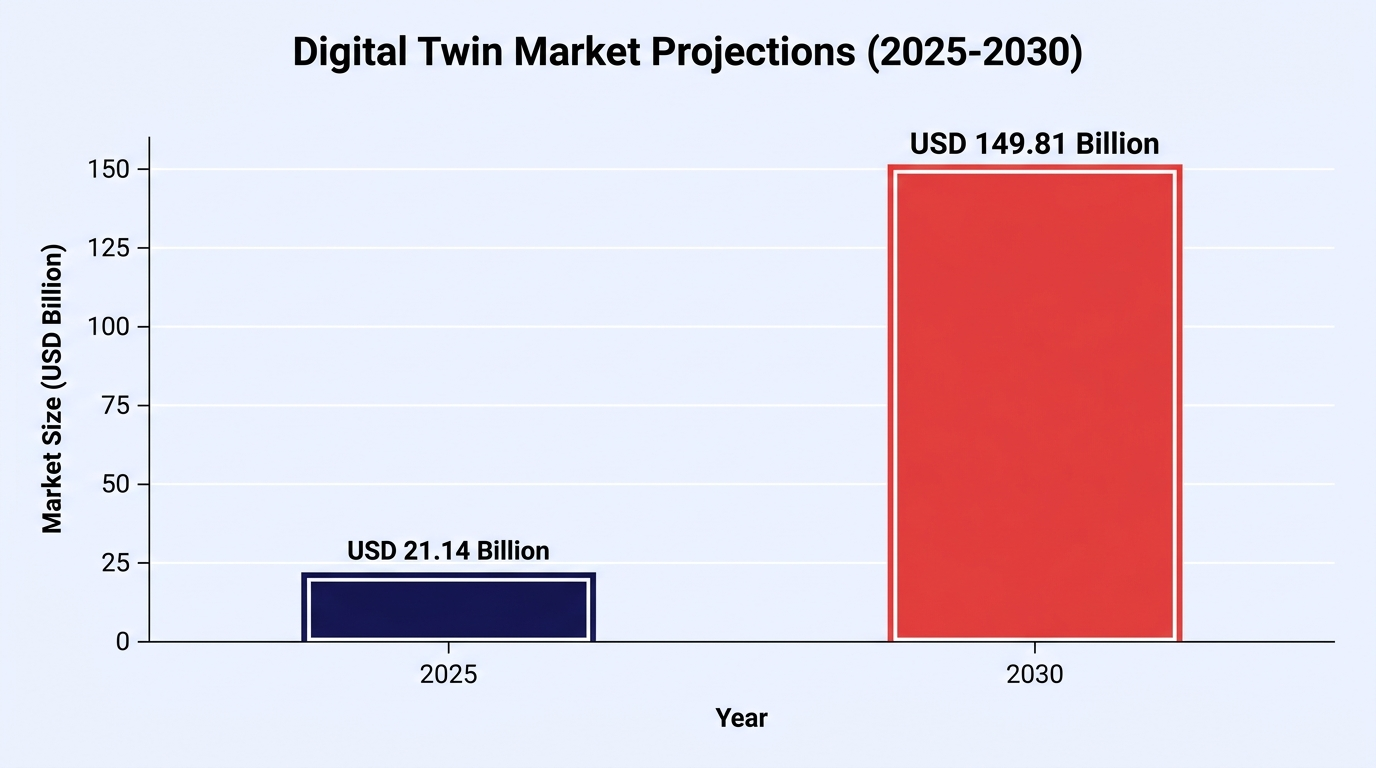
Digital Twin technology can significantly reduce downtime by up to 40% and improve reliability by 10%.The Digital Twin market is projected to grow from $21 billion in 2025 to $150 billion by 2030.AI integration in Digital Twins can lead to a 30% increase in operational efficiency and reduce labor costs by 40%.North America leads in Digital Twin adoption, with strong growth also forecasted in Europe and Asia-Pacific.Challenges include data quality issues, high implementation costs, and cybersecurity risks.Key Questions Answered.
59Pages of Deep Analysis
8Proprietary AI Visuals
308Curated Credible Sources
13Data Analysis Tables
Summary.