Smart Cities in India: Workforce Transformation.
Digital UrbanismSmart Cities IndiaTech PlanningUrban InfrastructureWorkforce Development
This report analyzes the transformation of India's workforce in the context of the Smart Cities Mission. It covers the project's impact on urban planning, digital governance, and technology integration. The report details shifts in workforce dynamics, focusing on digital, AI, and infrastructure sectors, emphasizing the transformation within real estate and urban infrastructure. It further explores regional variations, investment ecosystems, and presents global comparisons and future outlooks up to 2030.
Rakshit Badyal, Ghost Research
December 2025
Perspective.
PurposeTo analyze the workforce implications of India's Smart Cities Mission and provide strategic guidance for stakeholders.
AudienceGovernment policy makers, urban planners, real estate and infrastructure stakeholders.
Special EmphasisTechnology integration, digital governance, sustainability.
60Pages of Deep Analysis
123Curated Credible Sources
5Proprietary AI Visuals
10Data Analysis Tables
$495

Rakshit Badyal
1+ Years of Experience
Sectors & Industries
IndustrialsInformation Technology
Functions & Expertise
Market Intelligence
Have questions? Our Research Desk is here to help
Top Insights.
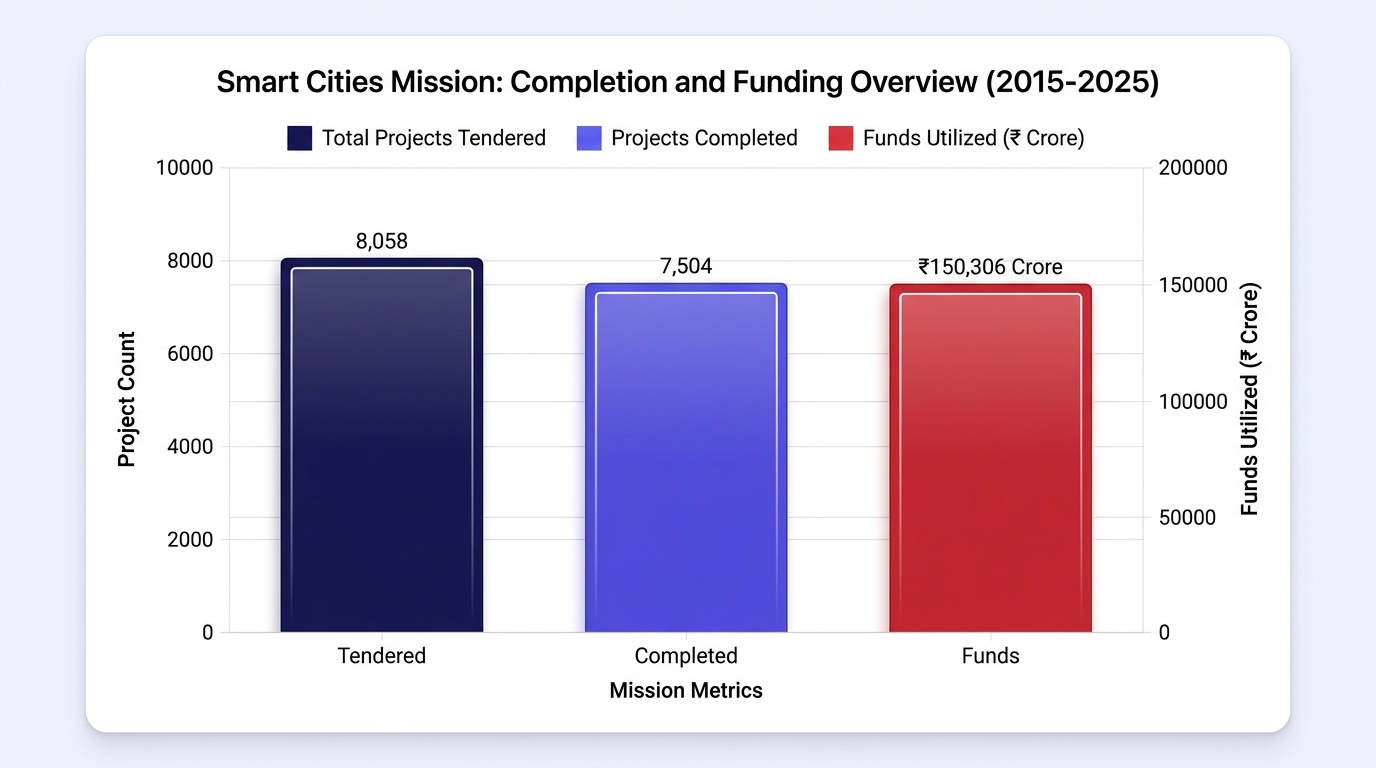
India's Smart Cities Mission transformed 100 cities with over 93% project completion.Smart city progress drives workforce transition towards AI and digital skills.Private sector investment in smart city infrastructure is increasing.Regional disparities present challenges and opportunities for replication.Global comparisons highlight gaps in India's smart city strategies.Key Questions Answered.
60Pages of Deep Analysis
5Proprietary AI Visuals
123Curated Credible Sources
10Data Analysis Tables
Summary.