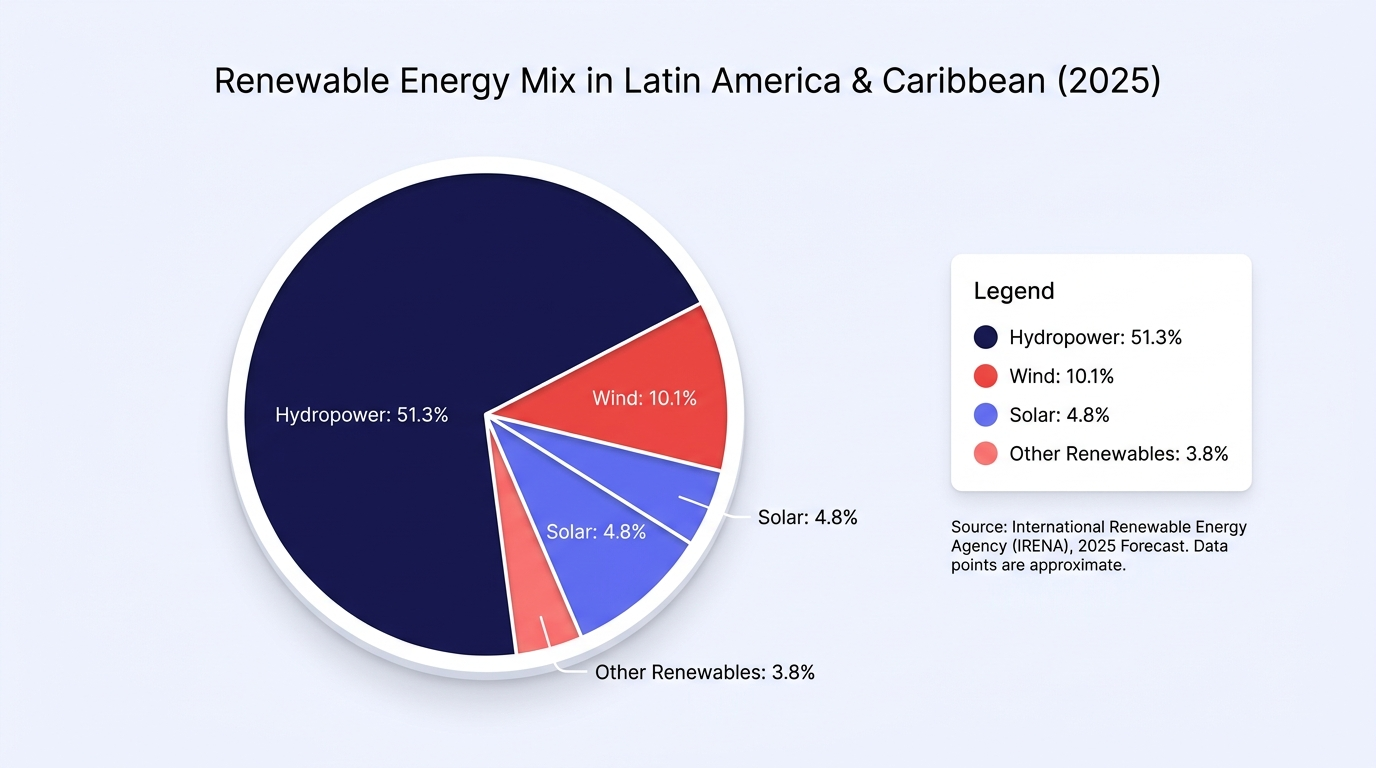
Generating visualization...
Renewable Energy Transformation in Latin America & Caribbean.
The report explores the widespread adoption of renewable energy in Latin America and the Caribbean, emphasizing the growth in renewable electricity generation, which reached 71% by mid-2025. It highlights socio-economic benefits like job creation, projecting 15 million new jobs by 2030, alongside equitable participation challenges for women and Indigenous communities. The analysis also covers policy frameworks, economic impacts, and future projections, aiming to ensure an inclusive energy transition. Key case studies, challenges such as regulatory delays, and strategic recommendations are presented to facilitate sustainable growth.
Clean Power EmploymentEconomic impactGlobal ReskillingJob CreationLatin AmericaPolicy FrameworkRenewable Energy
Kritika V, EZ Research
2025-12-01
47
Feedback
Limited Time Offer
$50$150
(exclusive of tax)Single User License47Pages of Deep Analysis
16Credible Sources Referenced
15Data Analysis Tables
1Proprietary AI Visuals
Perspective.
PurposeTo analyze the adoption of renewable energy in Latin America and the Caribbean, focusing on socio-economic impacts, regional policy, and future trends.
AudiencePolicymakers, investors, academic researchers, and the general public.
Report LengthComprehensive
Focus Areas.
Industries JobsRenewable energy, job creation, workforce training
Geographic AreasLatin America, Caribbean
Special EmphasisSustainability, policy frameworks, socio-economic impacts
Report Layout.
Executive Overview
- Updated adoption snapshot
- Contemporary drivers and barriers
- Socio-economic implications
Regional Renewable Energy Landscape
- Current renewable capacity

Get the Insights You Need — Download Now.
Insights.
Latin America leads globally in renewable electricity generation at 71% as of mid-2025.Job creation is a key benefit, with 15 million new jobs anticipated by 2030.Significant equity gaps exist for Indigenous and women workers.Brazil and Mexico are major players in renewable capacity.Infrastructure and policy reforms are needed for further growth.Key Questions Answered.