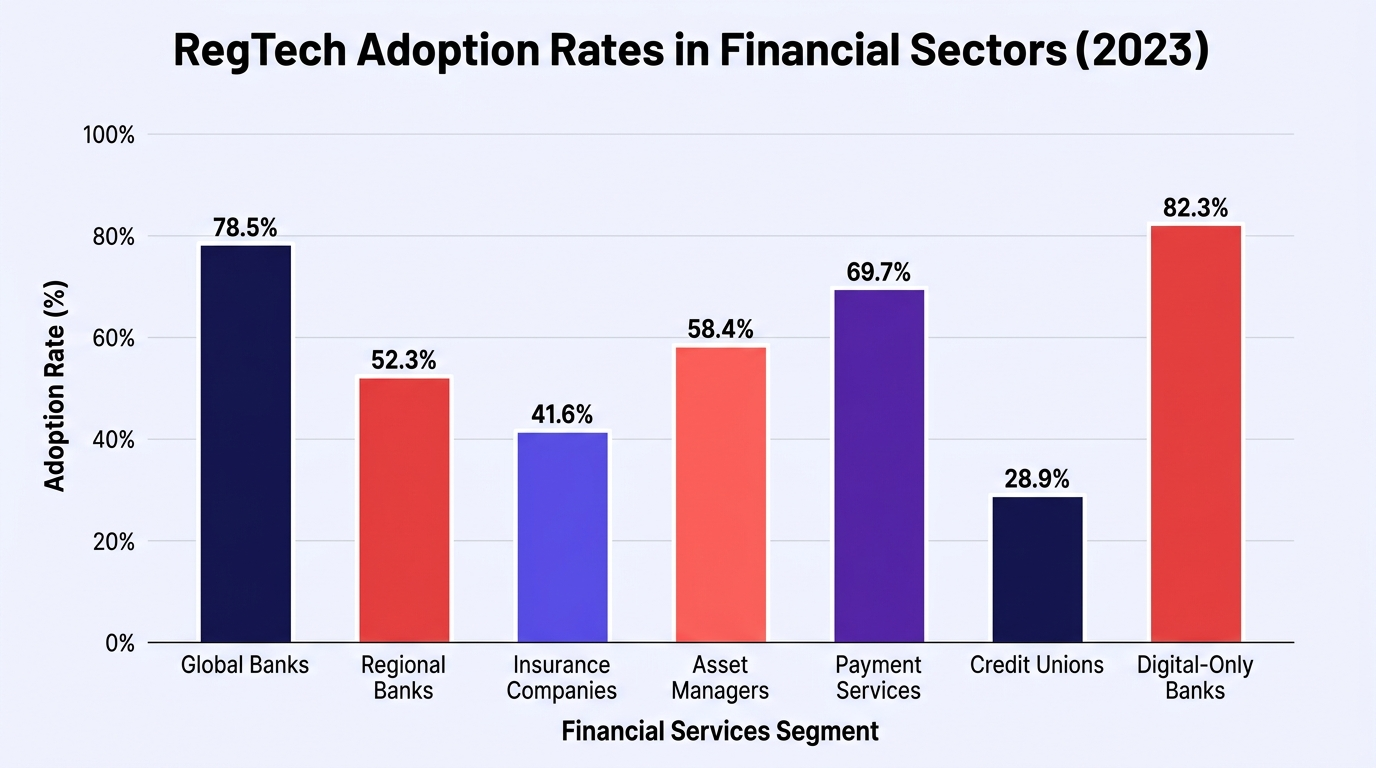
RegTech Adoption in BFSI: Are Compliance Systems Ready for AI APIs and Real-Time Monitoring.
AI in FinanceAPIsBFSIComplianceEuropeGlobalReal-Time MonitoringRegTech
This report evaluates the readiness of compliance frameworks in the Banking, Financial Services, and Insurance (BFSI) sector for next-generation Regulatory Technology (RegTech) innovations. The analysis highlights regional variations in RegTech adoption, emphasizing maturity in Europe and the US. It showcases the transformative impact of AI, real-time monitoring, and API integration on compliance processes. The report includes detailed case studies, challenges faced in implementation, and recommendations for future adoption strategies.
Vivek Goswami, Ghost Research
August 2025
Perspective.
PurposeTo assess the preparedness of BFSI compliance systems for integrating advanced RegTech tools.
AudienceThe report is designed for financial industry leaders, compliance officers, regulators, and technology providers.
Special EmphasisSpecial emphasis on innovation in compliance technology and regulatory adaptation.

61Pages of Deep Analysis
0Curated Credible Sources
2Proprietary AI Visuals
3Data Analysis Tables
$495

Vivek Goswami
11+ Years of Experience
Sectors & Industries
IndustrialsConsumer StaplesEnergy
Functions & Expertise
Market IntelligenceStrategy & GTM
Have questions? Our Research Desk is here to help
Top Insights.
RegTech adoption shows greatest maturity in Europe and the US, with significant investments in AI compliance solutions.AML/KYC solutions dominate RegTech implementation at 42%, followed by regulatory reporting and fraud detection.Integration with legacy systems remains a major barrier, cited by 64% of financial institutions.Advanced AI and machine learning drastically improve compliance efficiency and accuracy.Regulators are increasingly open to technology-driven compliance, fostering innovation through sandboxes and innovation hubs.Key Questions Answered.
61Pages of Deep Analysis
2Proprietary AI Visuals
0Curated Credible Sources
3Data Analysis Tables
Summary.