Generating visualization...
Platform Economy in EU Retail.
The report investigates the impact of the platform economy on gig labor, automation, and employment within the EU retail sector between 2020 and 2030. It thoroughly examines regulatory frameworks, the demographic profile of platform workers, and the role of automation technologies. The analysis highlights regional disparities in platform adoption and outlines social protection gaps in the gig economy. The report also offers detailed policy recommendations aimed at promoting fair, transparent, and sustainable platform practices across member states. It concludes with insights into competitive dynamics in EU retail markets and future trends shaped by technological and regulatory changes.
AutomationDigital Emplyment ModelEU RetailEU Workforce TrendsGig LaborPlatform EconomyPolicy Frameworks
Piyush Y, EZ Research
2025-12-01
60
Feedback
Limited Time Offer
$50$150
(exclusive of tax)Single User License60Pages of Deep Analysis
105Credible Sources Referenced
7Data Analysis Tables
8Proprietary AI Visuals
Perspective.
PurposeTo analyze the platform economy's impact on EU retail, focusing on gig work, automation, and policy.
AudiencePolicymakers, business leaders, and stakeholders in the retail and tech industries.
Report LengthComprehensive and detailed.
Focus Areas.
Industries JobsRetail industry, gig economy jobs.
Geographic AreasEuropean Union, with regional analyses.
Special EmphasisSustainability, regulatory frameworks, technology and innovation.
Report Layout.
Introduction to Platform Economy in European Retail
- Overview of platform economy and platformization in EU retail
- Evolution of digital retail platforms and platform infrastructure
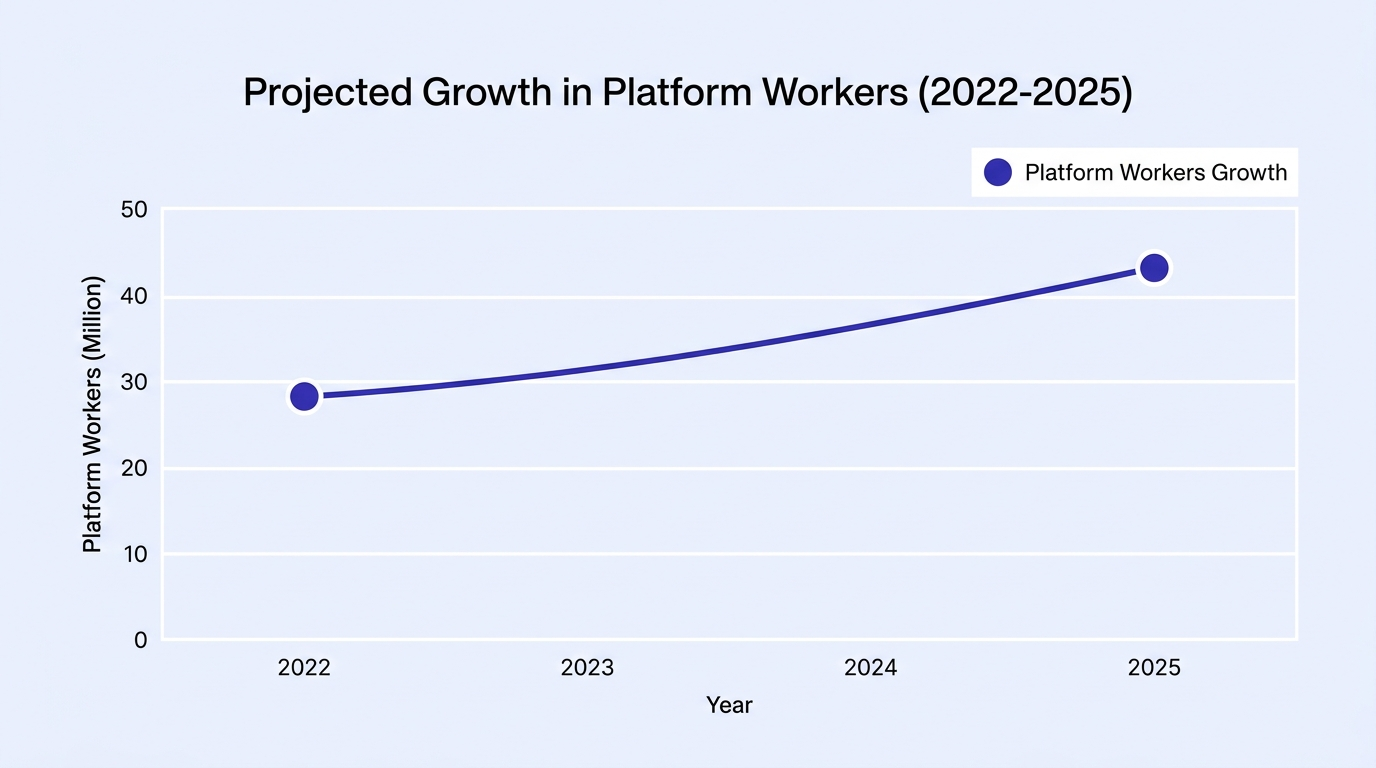
- Current scale and projected growth of digital platform workers in the EU

Get the Insights You Need — Download Now.
Insights.
The platform economy significantly reshapes retail through digital platforms and gig labor.Automation technologies are transforming job roles and creating new skill demands.Regulatory frameworks like the Platform Work Directive aim to enhance worker protections.Regional disparities in platform development affect economic cohesion across the EU.Social protection gaps exist for gig workers, requiring innovative policy solutions.Key Questions Answered.