Offshore Wind Expansion in Europe.
Europe SustainabilityGreen JobsRenewable EnergyWorkforce Trainingoffshore wind
The report provides a comprehensive analysis of the offshore wind expansion in Europe, detailing workforce needs, safety standards, and the development of training infrastructure. It highlights rapid sector growth driven by EU climate targets and investments. Key challenges include skills shortages, regional disparities, and safety standard evolution. The report underscores the need for strategic workforce planning, public-private collaboration, and policy support to meet future demand.
Celso Gomes, Ghost Research
December 2025
Perspective.
PurposeThe report aims to assess Europe's offshore wind expansion, focusing on workforce dynamics, safety standards, and training solutions.
AudienceThe report is intended for industry stakeholders, policymakers, educators, and investors in the renewable energy sector.
Special EmphasisEmphasis on workforce development, safety compliance, technological innovation, and policy alignment.
57Pages of Deep Analysis
90Curated Credible Sources
0Proprietary AI Visuals
3Data Analysis Tables
$495

Celso Gomes
10+ Years of Experience
Sectors & Industries
IndustrialsConsumer Staples
Functions & Expertise
Market IntelligenceConsumer & Retail
Have questions? Our Research Desk is here to help
Top Insights.
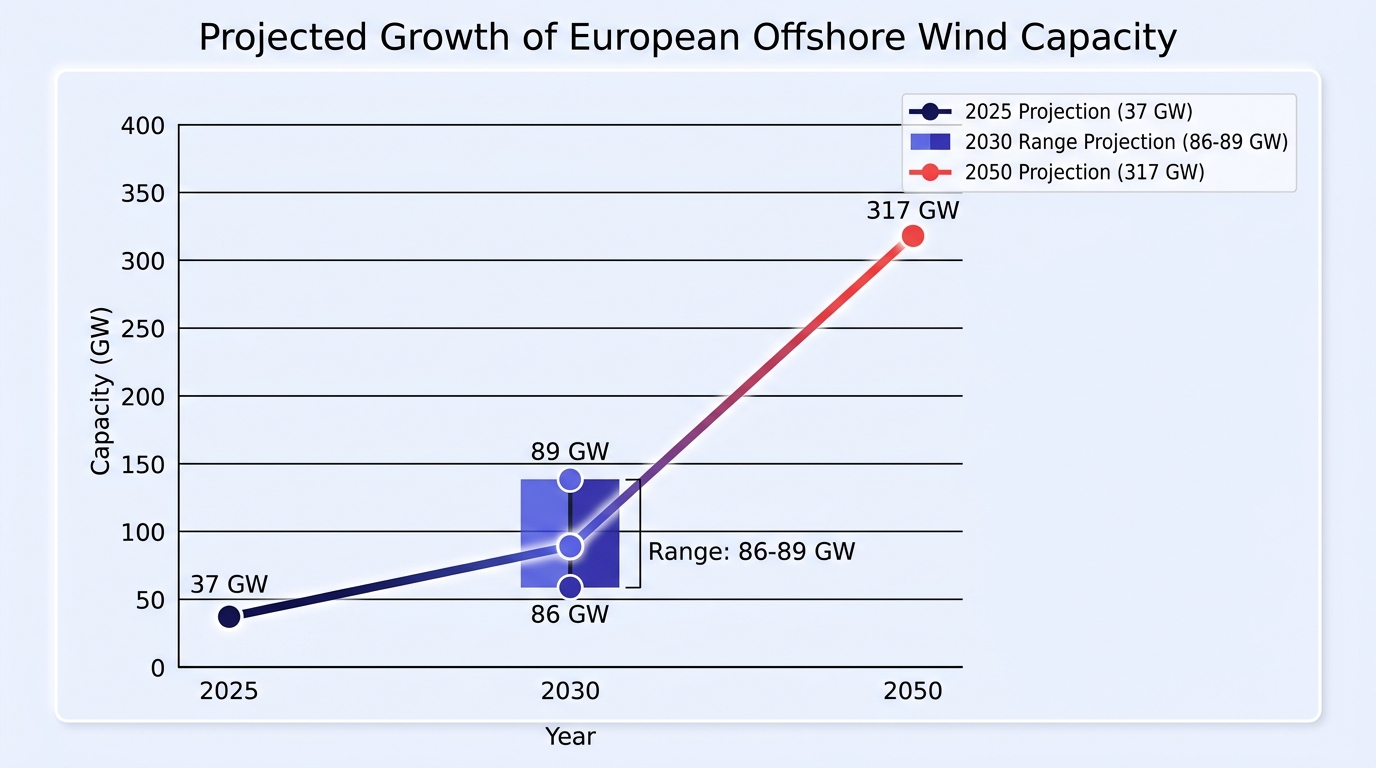
Europe's offshore wind capacity is set to dramatically grow to 317 GW by 2050.The labor market could expand to 500,000 jobs by 2035, but skilled labor shortages remain a key challenge.Safety standards and regulatory frameworks are evolving with new EU and international guidelines.Workforce development emphasizes training, inclusion, diversity, and cross-sector collaboration.Strategic investment in training infrastructure is critical to meet future offshore wind workforce demands.Key Questions Answered.
57Pages of Deep Analysis
0Proprietary AI Visuals
90Curated Credible Sources
3Data Analysis Tables
Summary.