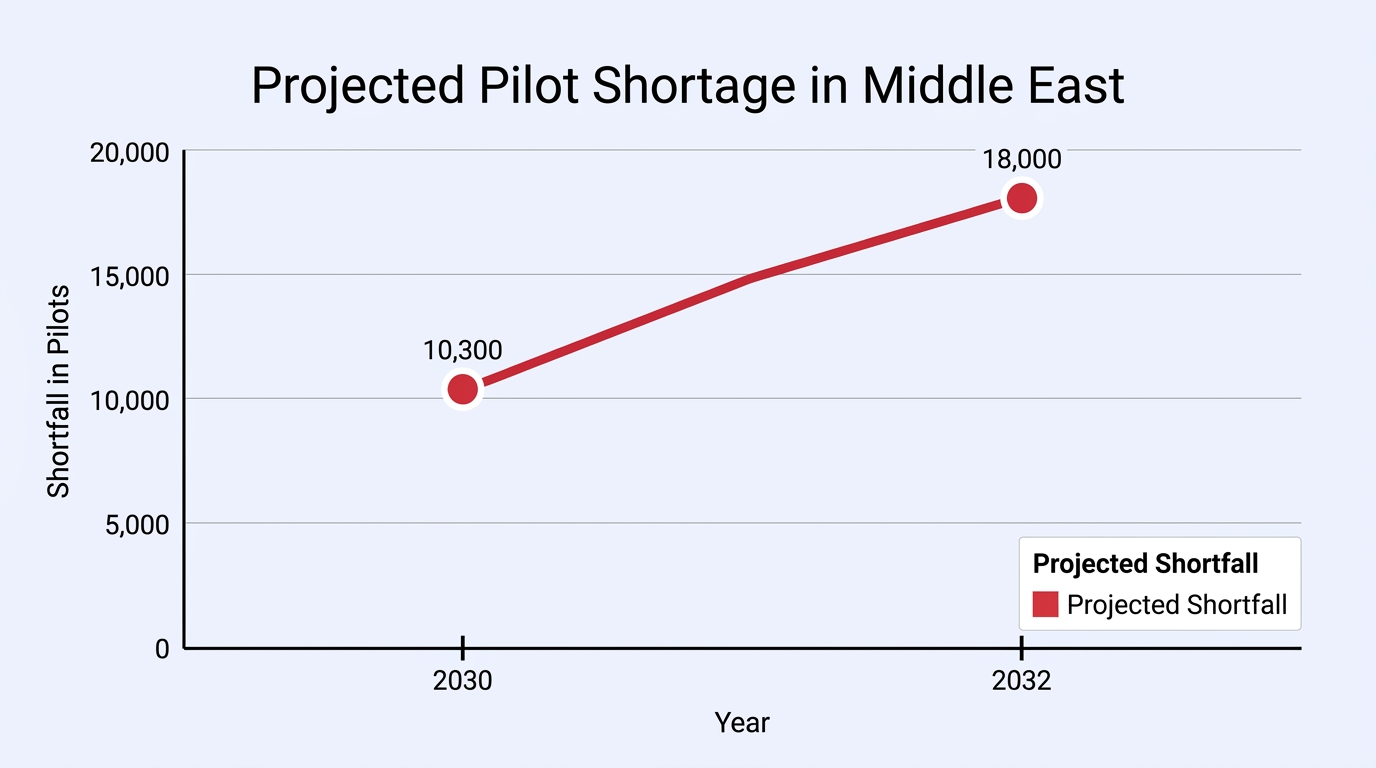
Middle East Pilot Shortage & Cost of Human Capital.
aviation labor gapmanpower planningpilot trainingwage inflation
The report, 'Middle East Pilot Shortage & Cost of Human Capital,' investigates the severe pilot shortage in the GCC region projected to exceed 10,300 by 2030. Driven by aggressive fleet expansion and robust passenger traffic growth, the shortage presents significant operational and economic challenges. It details the components of human capital costs, regulatory frameworks, and industry strategies for building a resilient pilot workforce. Strategies include expanding cadet programs, international hiring, and leveraging AI and advanced simulation technologies.
Gaurav Kumar, Ghost Research
December 2025
Perspective.
PurposeTo analyze pilot shortages and human capital costs in GCC aviation and provide strategic recommendations for stakeholders.
AudienceGCC aviation stakeholders, policymakers, airlines, and aviation training institutions.
Special EmphasisSustainability, regulatory policies, workforce development.

27Pages of Deep Analysis
100Curated Credible Sources
3Proprietary AI Visuals
4Data Analysis Tables
$495

Gaurav Kumar
2+ Years of Experience
Sectors & Industries
Information Technology
Functions & Expertise
Data & AIStrategy & GTM
Have questions? Our Research Desk is here to help
Top Insights.
GCC faces a projected pilot shortfall exceeding 10,300 by 2030.Pilot shortages threaten operational reliability and network expansion.Human capital costs are high due to compensation and training.Expansion of cadet programs and AI technologies is critical.Collaboration is needed for licensing and workforce planning.Key Questions Answered.
27Pages of Deep Analysis
3Proprietary AI Visuals
100Curated Credible Sources
4Data Analysis Tables
Summary.