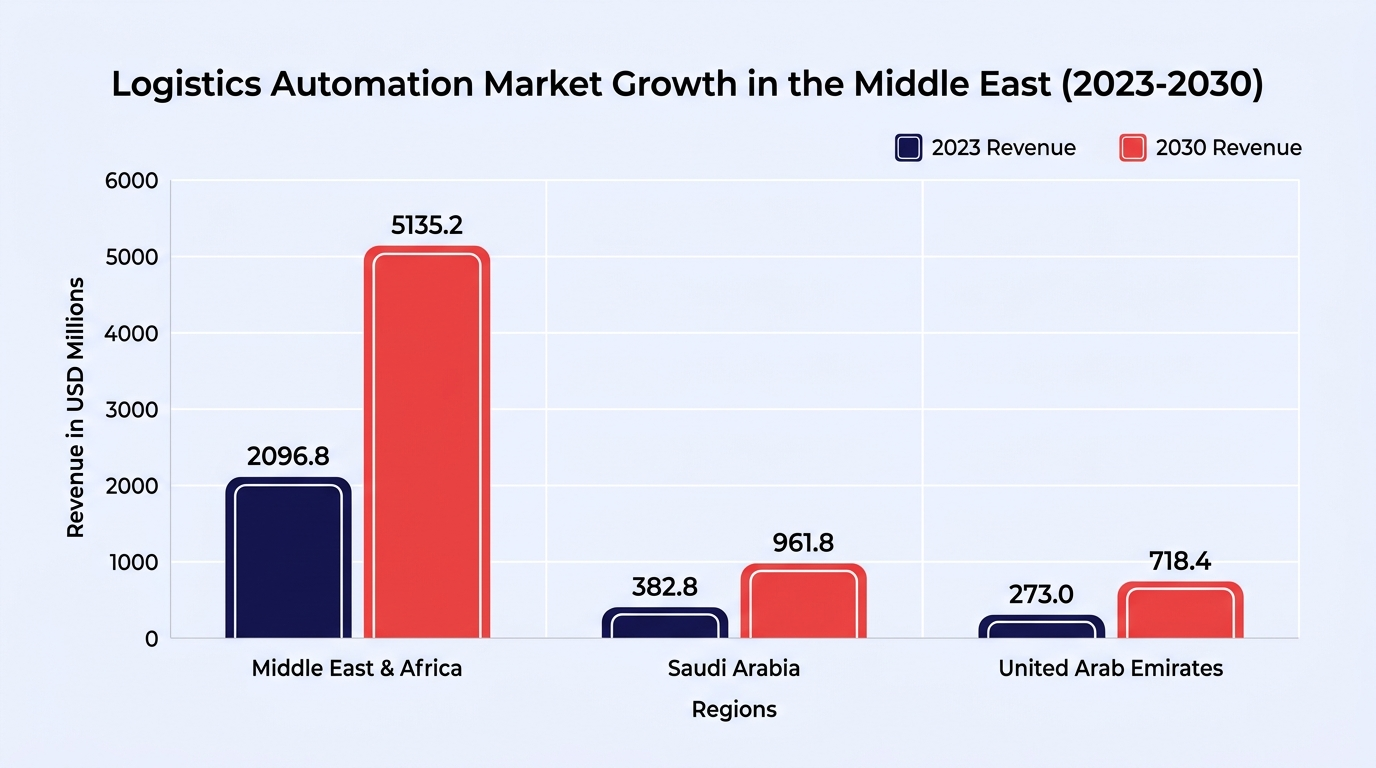
Logistics Automation and Workforce Impact in Middle East.
The report discusses the transformative impact of logistics automation and mega-warehousing in the Middle East, with a primary focus on the GCC region. It highlights the rapid growth of the automation market, driven by e-commerce and strategic national visions. The report examines workforce displacement, skill gaps, and the emergence of hybrid roles due to automation advances. It also delves into strategies for workforce transition and the broader economic and social implications of these technological changes.
Geographic AreasMiddle East, focusing on the GCC region.
Special EmphasisSustainability, innovation, and policy frameworks.
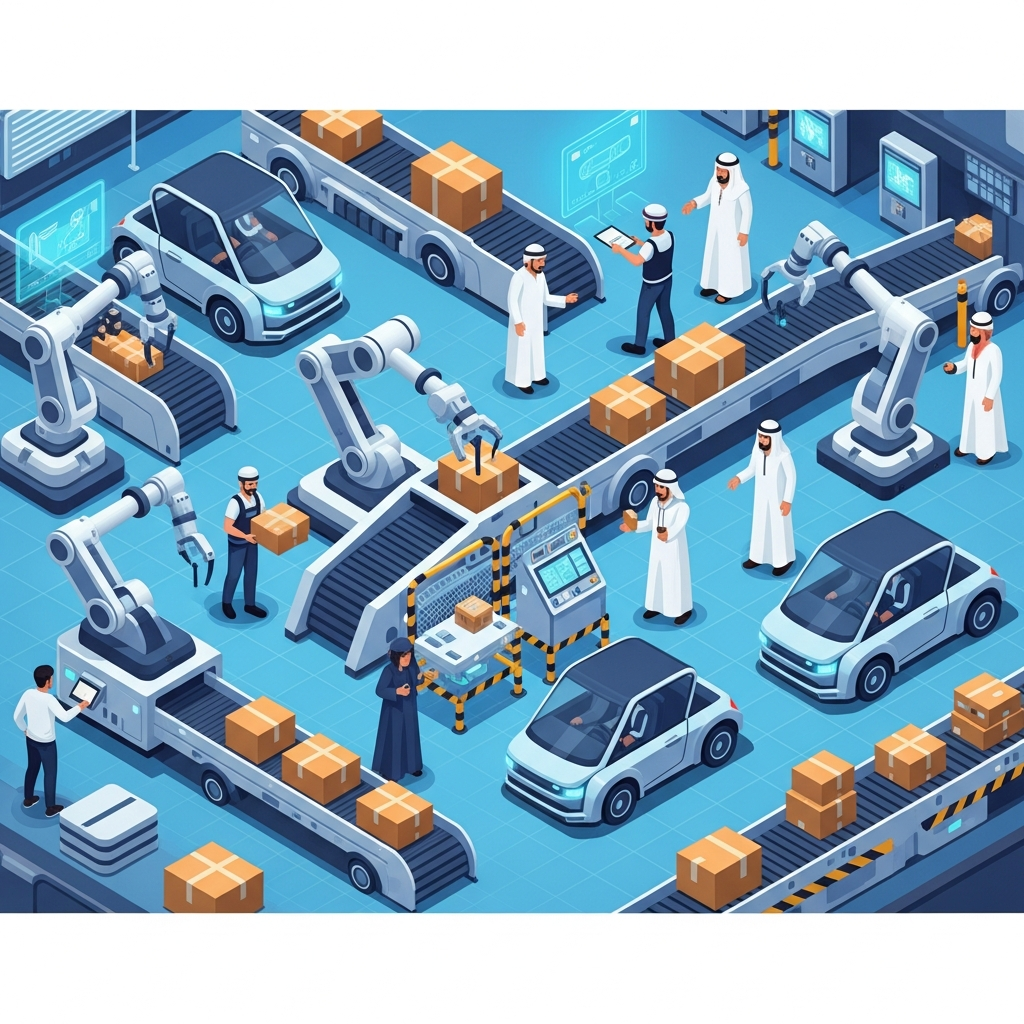
Report Layout.
Executive Overview
Overview of current logistics automation and smart warehousing landscape
Key workforce dynamics and emerging challenges
Logistics and Warehousing Landscape in the GCC
Market scale, growth forecasts, and strategic investments
Get the Insights You Need — Download Now.
Insights.
Logistics automation is rapidly advancing the Middle East market, led by e-commerce growth.By 2030, up to 45% of logistics jobs could be automated in the GCC.The region faces significant skills gaps, especially in AI and digital fluency.Reskilling and human-centric strategies are crucial for workforce adaptation.National strategies like Vision 2030 support automation-friendly policies.
Key Questions Answered.
GHOST Research combines the power of Traditional Research & LLMs.
-Sources of Curated Credible Data
28+Major Business Languages
FractionCost of traditional Research
Live StreamOf information for latest insights
Powered byProprietary AI Research Engine generates deeper insights than traditional Market Research
1000+ Subject matter expertsIndustry leading Research Experts across topics, sectors & geographies publish insightful reports
Emerging logistics corridors, free zones, and urban micro-fulfilment hubs
Principal industry stakeholders and ecosystem participants
Mega-Warehousing Trends and Developments
Contemporary definitions and typologies
Warehouse architecture evolution
Regional implementations
Automation Technologies Transforming Middle East Logistics
AMRs, AGVs, and ASRS innovations
Advanced WMS/WES
AI-driven analytics and digital twins
IoT, 5G, and smart infrastructure
Workforce Demographic Analysis
Employment metrics
Workforce composition
Trends in workforce evolution
Direct Workforce Impact Assessment
Automation-induced job displacement
Hybrid roles and collaboration models
Compensation trends
Skills Gap Analysis
Workforce competencies
Demand for technical skills
Training programs and ecosystem
Workforce Transition Strategies
Reskilling and upskilling initiatives
Government frameworks
Industry best practices
Economic and Social Implications
Productivity and GDP impacts
Social equity and labor nationalization
Migration and workforce trends
Comparative Analysis with Global Markets
Automation adoption benchmarks
Workforce impact contrasts
Transferable lessons
Future Outlook and Scenarios (2025–2030)
Forecasted automation adoption
Workforce composition and role evolution
Emerging technologies
Regulatory Framework and Policy Considerations
Current regulations
National strategies
Policy recommendations
Stakeholder Perspectives
Industry leaders
Worker viewpoints
Government and policy perspectives
Strategic Recommendations
Guidance for policymakers
Recommendations for operators
Directions for educational institutions
Advice for workforce participants
Conclusion and Key Takeaways
Conclusion
Key Takeaways
Appendices
Research methodology and analytical approach
Data sources and assumptions
Supplementary tables and figures
References and Citations
2
How much of the workforce could be automated by 2030?