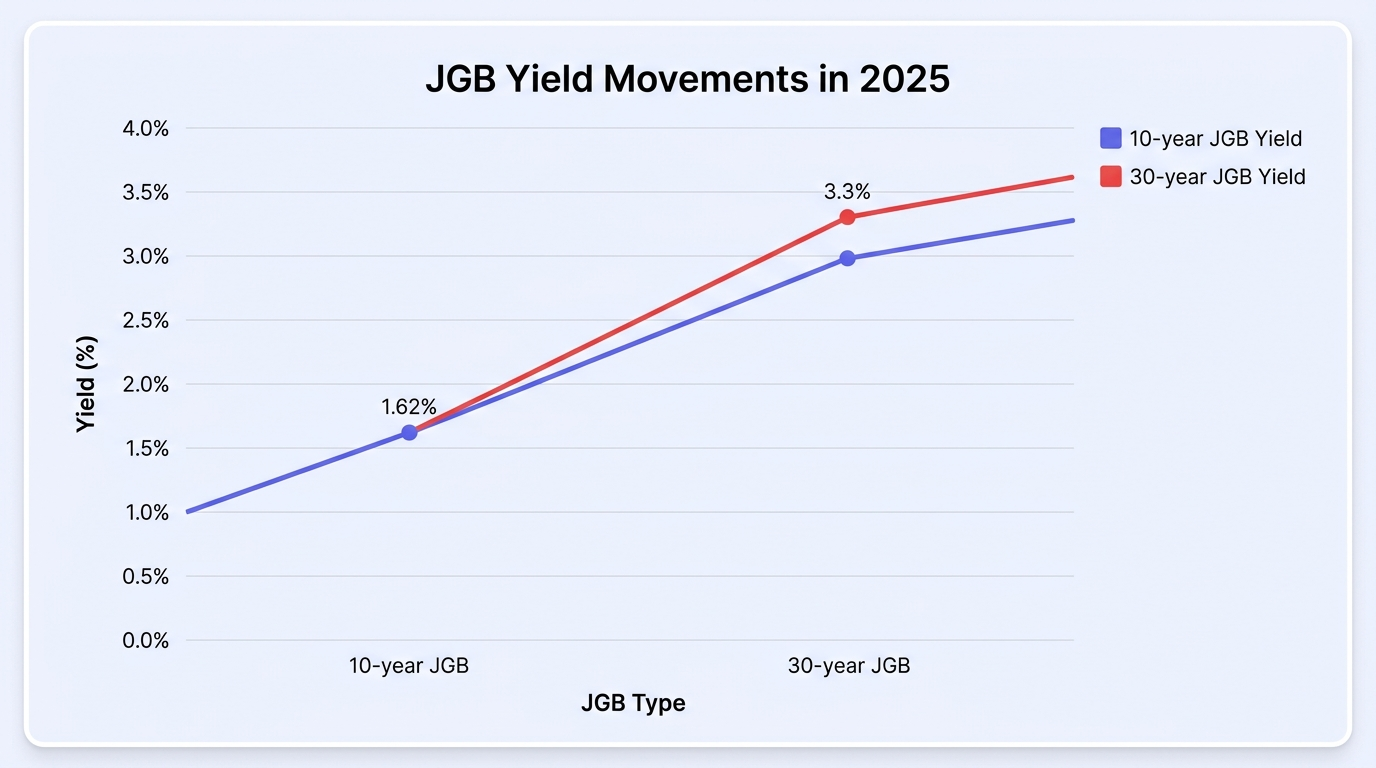
Generating visualization...
Japan's Carry Trade Unwind: Market Risks.
The report explores the risks and implications of Japan's yen carry trade unwind on global markets expected in 2025-2026. It examines the mechanics, scale, and vulnerabilities of the carry trade, and analyzes Japan's macroeconomic situation including its monetary policy and fiscal sustainability. Key insights include the potential for global financial contagion, implications for investor sentiment, and policy constraints faced by central banks. The report also offers scenario analyses and strategies for risk management in light of potential market disruptions.
Japan monetary policyfinancial instabilityglobal marketsinflation trendsyen carry trade
Rakshit B, Ghost Research
2025-12-11
44
Feedback
Limited Time Offer
$50$150
(exclusive of tax)Single User License44Pages of Deep Analysis
46Credible Sources Referenced
6Data Analysis Tables
5Proprietary AI Visuals
Perspective.
PurposeTo analyze the market risks and implications of Japan's yen carry trade unwind on global markets.
AudienceEconomists, investors, policymakers, and financial analysts.
Report LengthComprehensive
Focus Areas.
Industries JobsFinance, investment, and economics sectors.
Geographic AreasJapan, Asia, and global markets.
Special EmphasisMonetary policy and financial stability.

Report Layout.
Understanding the Yen Carry Trade
- Mechanics of modern yen carry trade
- Evolution of its role in global capital flows
- Current scale and structural vulnerabilities
Japan’s Macroeconomic and Monetary Policy Landscape
- Inflation trajectory and core-core price pressures
- BOJ’s policy normalization
- Yen depreciation dynamics
Japan’s Fiscal Sustainability Challenges
- Updated debt-to-GDP metrics
- Bond market stress
- Government stimulus and debt issuance
Inflation-Monetary Policy Trade-Offs
- Constraints on further easing
- Risks of overtightening
- Comparison with prior BOJ policy normalization episodes
Investor Sentiment and Market Behavior Shifts
- Transition from deflationary mindset
- Bond market repricing
- Behavioral feedback loops
Global Safety Nets and Policy Constraints
- Limits of central bank intervention
- Fed policy outlook
- Cross-border policy coordination gaps
Key Upcoming Events and Catalysts
- December 2025 BOJ meeting
- Fiscal year-end and stimulus timelines
- Potential yen intervention thresholds
Critical Market Thresholds and Technical Levels
- USD/JPY key levels
- JGB yield thresholds
- Correlation with equities
Global Contagion and Spillover Channels
- Transmission to global bond markets
- Regional vulnerabilities in Asia
- Institutional positioning risks
Historical Precedents and Structural Differences
- Comparison with past carry trade unwind episodes
- Structural shifts in bond markets
- Lessons for current policy
Scenario Analysis
- Base case: gradual unwind
- Stress case: abrupt correction
- Optimistic case: smooth transition
Risk Mitigation and Strategic Positioning
- Hedging strategies
- Diversification across currencies and asset classes
- Tactical positioning amid volatility
Conclusion and Forward-Looking Monitoring Framework
- Recap of key structural risks
- Long-term implications
- Suggested indicators and monitoring dashboard
References and Data Sources
- Central bank communications
- Market data and research
- Real-time news coverage

Get the Insights You Need — Download Now.
Insights.
The yen carry trade unwind poses significant risks to global asset markets.Rising JGB yields could lead to capital repatriation and affect liquidity.Inflationary pressures limit the BOJ's policy flexibility, increasing market risk.Investor sentiment is shifting from a deflationary to a reflationary outlook.Strategic hedging and diversification are crucial for risk management.Key Questions Answered.