India Retail & D2C 2026: Shopper Behavior and Loyalty Shifts.
This report explores the shifting landscape of retail and direct-to-consumer (D2C) markets in India, focusing on evolving shopper behaviors and loyalty dynamics. It highlights the growing importance of digital-first shopping experiences and omnichannel strategies in meeting consumer demands. The study provides strategic insights into how businesses can leverage personalization, technology, and workforce innovations to enhance customer retention and optimize operations. Emphasizing the role of sustainability and data-driven decision-making, the report offers a comprehensive analysis of the future of retail in India.
Consumer trends IndiaCustomer LoyaltyD2C BrandsFuture of RetailIndia RetailShopper Behaviour
Special EmphasisSustainability, Personalization, Innovation, Privacy

Report Layout.
Executive Overview for Investors and Management
Market opportunity size and growth projections
Key investment metrics and ROI potential
Strategic implications for workforce planning
South Asia Retail Landscape: Focus on India
Get the Insights You Need — Download Now.
Insights.
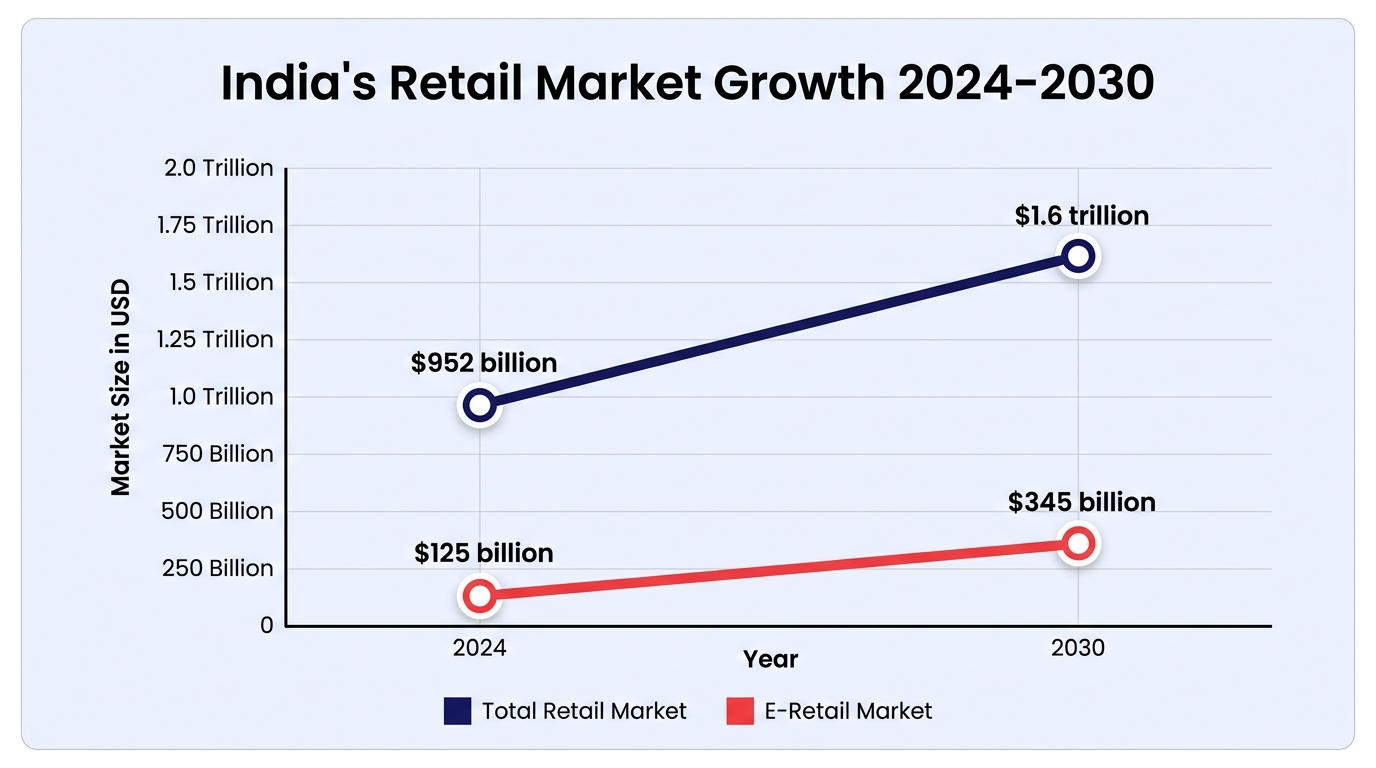
India's retail market is expected to reach $1.6 trillion by 2030.Digital commerce and personalization are key to retail growth.Sustainability is becoming a significant driver of consumer loyalty.Omnichannel capabilities are crucial for customer retention.Workforce technology and upskilling are essential for future retail success.
Key Questions Answered.
GHOST Research combines the power of Traditional Research & LLMs.
-Sources of Curated Credible Data
28+Major Business Languages
FractionCost of traditional Research
Live StreamOf information for latest insights
Powered byProprietary AI Research Engine generates deeper insights than traditional Market Research
1000+ Subject matter expertsIndustry leading Research Experts across topics, sectors & geographies publish insightful reports
Comparative market analysis across South Asian countries
India's dominant position and unique characteristics
Cross-border retail and D2C opportunities
Evolution of Indian Shopper Behavior 2023–2026
Fundamental shifts in purchase decision-making
Channel preference transformations
New consumer expectations shaping retail operations
Digital-First Shopping Journey Analysis
Mobile commerce dominance metrics
Voice and visual search adoption rates
Contactless shopping preferences and implications
Loyalty Paradigm Shifts in Indian Retail
From transactional to experiential loyalty models
Community-based loyalty innovations
Emotional vs. rational loyalty drivers in Indian context
Personalization: The New Loyalty Currency
Personalization expectations across customer segments
Data-driven loyalty approaches
Privacy-compliant personalization strategies
Future of Work in Retail and D2C
Evolving workforce models to meet new shopper behaviors
Remote and hybrid work models in retail operations
Technology-Enabled Workforce Transformation
Digital upskilling requirements and investment
Productivity enhancements through technology
Data-driven decision making capabilities
Consumer Behavior Segments and Their Evolution
Urban vs. rural consumer behavior distinctions
Age and income-based behavior patterns
Emerging shopper tribes and micro-segments
Social Commerce and Influencer Impact on Loyalty
Creator economy's role in purchase decisions
Community-building as loyalty driver
Social validation metrics and investment implications
Subscription Models and Recurring Revenue Strategies
Subscription adoption trends across categories
Lock-in effects and churn prediction
Subscription economics for investors
Organizational Structures for the Future
Agile retail team configurations
Gig economy integration in retail operations
Leadership requirements for evolving retail models
Tech Infrastructure for Enhanced Shopper Experience
Essential technology stack requirements
Build vs. buy considerations for loyalty platforms
Implementation roadmaps for behavior tracking systems
Human Capital Strategies for 2026
Talent acquisition aligned with new shopper expectations
Skills gap analysis for loyalty management
Compensation models for customer retention specialists
Value-Based Consumption and Ethical Shopping
Sustainability as loyalty driver
Transparent sourcing expectations
ESG considerations for investor evaluation
Omnichannel Behavior Patterns
Physical-digital integration expectations
Seamless experience demands
Channel attribution challenges and solutions
Financial Projections: Loyalty Economics
Customer acquisition vs. retention cost analysis
Lifetime value calculations by segment
Payback period analyses for loyalty investments
Implementation Roadmap
Phased approach to behavior tracking and loyalty programs