Hospital-at-Home Economics: Can 50% Cost Savings Survive Beyond CMS Waivers?.
Healthcare EconomicsHospital-at-HomeReimbursement ModelsTechnology IntegrationWorkforce Transformationhospital at home economics
This report analyzes the sustainability of Hospital-at-Home care models in achieving 50% cost savings beyond the expiration of CMS waivers. It explores various economic drivers, cost structures, and reimbursement landscapes while focusing on workforce transformation in North America. Key areas include market evolution, economic sustainability, and technology requirements. The report also includes case studies and strategic recommendations for health system leaders.
Anagha Nikam, Ghost Research
March 2026
Perspective.
PurposeTo assess the long-term viability of Hospital-at-Home cost savings beyond current policy frameworks.
AudienceHealth system leaders, policymakers, and healthcare industry stakeholders.
Special EmphasisPolicy evolution, economic sustainability, and workforce transformation.

110Pages of Deep Analysis
103Curated Credible Sources
20Proprietary AI Visuals
26Data Analysis Tables
$495

Anagha Nikam
7+ Years of Experience
Sectors & Industries
Consumer StaplesEnergyHealth Care
Functions & Expertise
Market IntelligenceData & AI
Have questions? Our Research Desk is here to help
Top Insights.
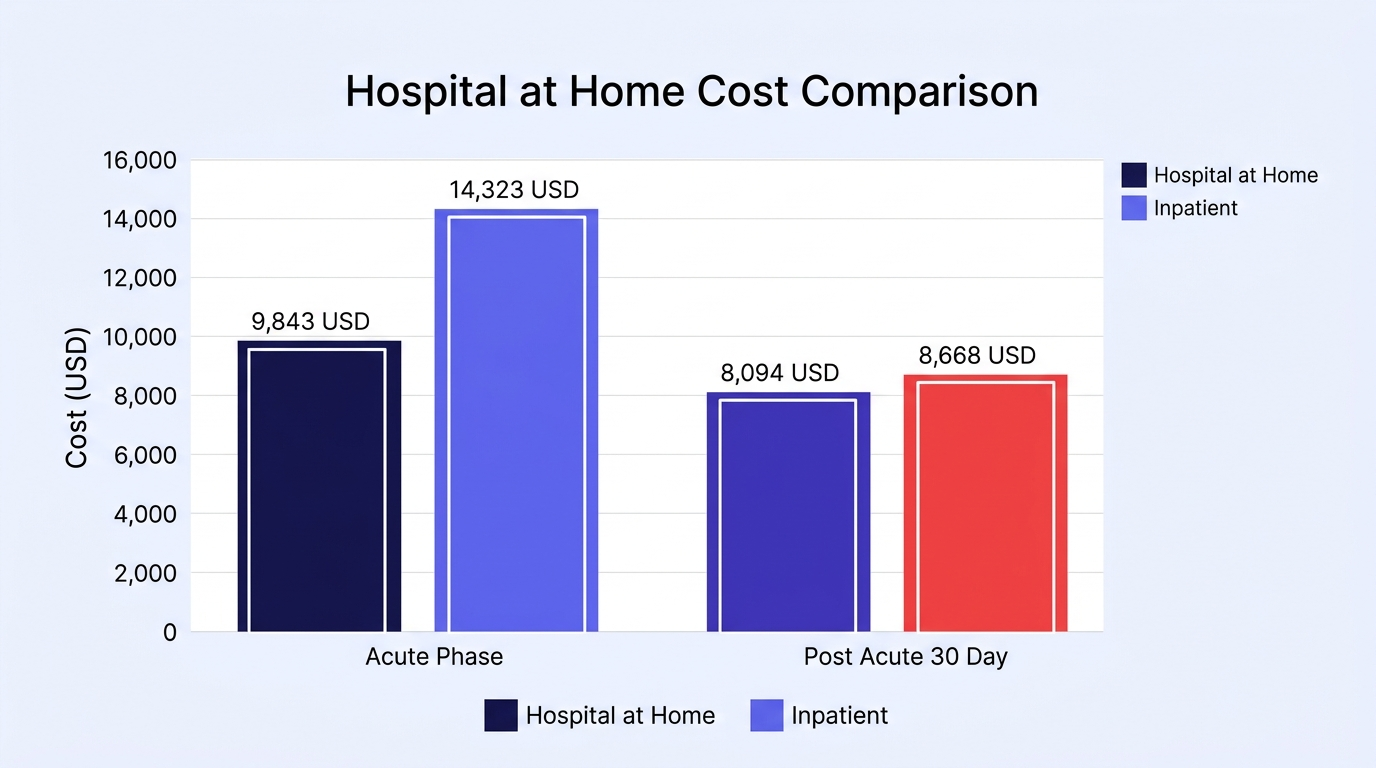
Hospital-at-Home models show 19-38% cost savings, though 50% is challenging without further structural changes.Economic sustainability requires managed cost structures, scalable operations, and diversified payment models.Workforce transformation involves shifting to virtual roles and utilizing centralized command centers.Future reimbursement models are moving beyond fee-for-service to align with value-based care principles.Advanced technology integration is critical for operational efficiency and patient care optimization.Key Questions Answered.
110Pages of Deep Analysis
20Proprietary AI Visuals
103Curated Credible Sources
26Data Analysis Tables
Summary.