Gen Z Consumption Patterns: Why Loyalty Is Structurally Broken.
Brand SwitchingConsumer BehaviorDigital EngagementGen Z LoyaltyPlatform EconomicsSocial Commerce DynamicsSustainability
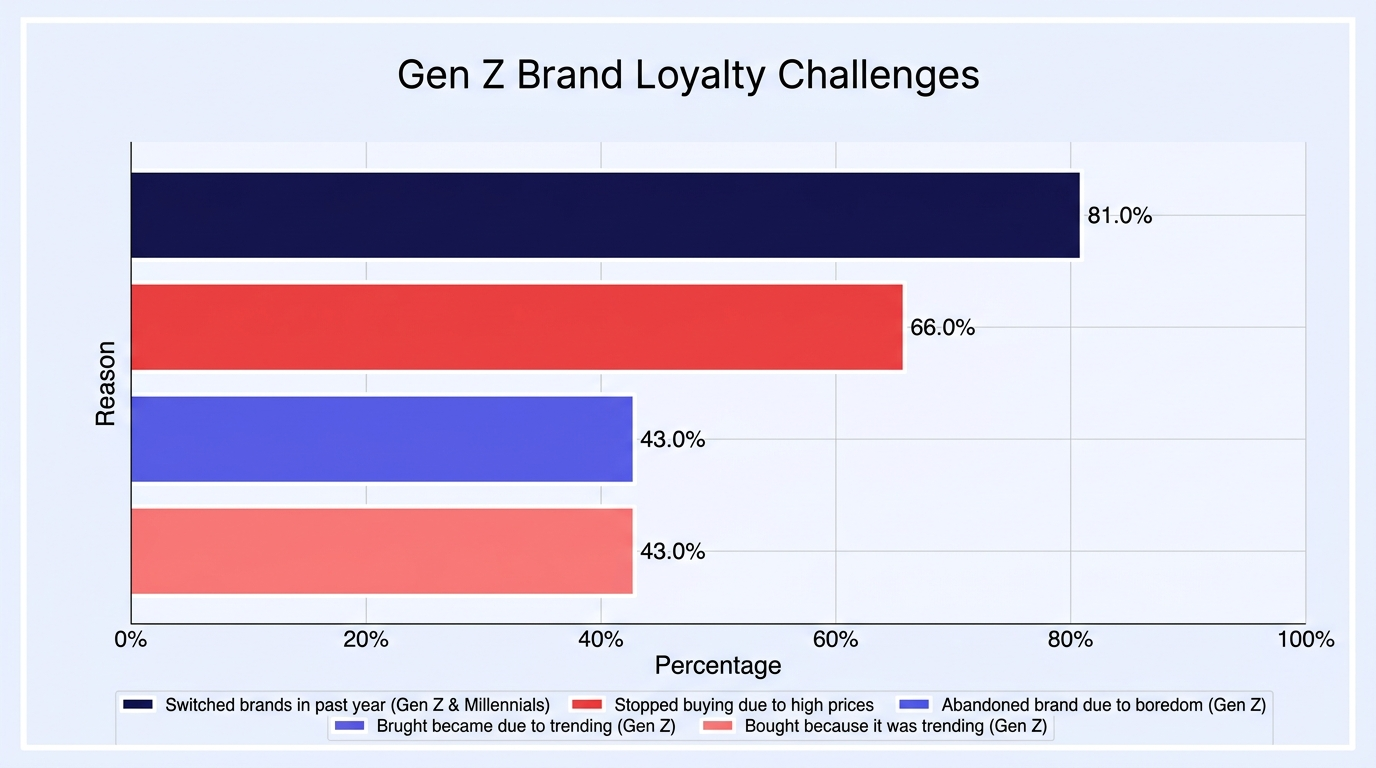
This report provides a comprehensive analysis of how traditional loyalty models are failing to resonate with Gen Z consumers and offers strategies for brands to adapt. It explores Gen Z's preference for conditional, trend-driven loyalty, emphasizing technology and community engagement. The report details sector-specific implications across beauty, fashion, FMCG, and technology industries. It concludes with strategic recommendations for brands to innovate loyalty frameworks, focusing on immediate utility, emotional resonance, and personalization.
Rishov Mondal, Ghost Research
February 2026
Perspective.
PurposeTo analyze why traditional loyalty models are failing with Gen Z and provide strategic recommendations for adaptation through 2030.
AudienceBrands, marketers, and business leaders looking to understand and engage with Gen Z consumers.
Special EmphasisEmphasis on sustainability, innovation, and digital engagement strategies.

86Pages of Deep Analysis
101Curated Credible Sources
18Proprietary AI Visuals
17Data Analysis Tables
$495

Rishov Mondal
5+ Years of Experience
Sectors & Industries
Information Technology
Functions & Expertise
Market IntelligenceTechnology & Cybersecurity
Have questions? Our Research Desk is here to help
Top Insights.
Gen Z prioritizes conditional loyalty based on immediate value and personalized experience.Traditional loyalty programs struggle due to Gen Z's high rate of brand switching and algorithm-driven discovery.Technology, especially AI and short-form video, plays a crucial role in shaping loyalty dynamics.Sustainability and ethical practices are essential for building trust with Gen Z consumers.Emotional connection and community engagement drive long-term loyalty.Key Questions Answered.
86Pages of Deep Analysis
18Proprietary AI Visuals
101Curated Credible Sources
17Data Analysis Tables
Summary.