Generating visualization...
GCC Circular Economy: Workforce Transformation.
The report titled 'GCC Circular Economy: Workforce Transformation' explores how the shift towards a circular economy, particularly in manufacturing, is impacting job shifts and workforce dynamics in the Gulf Cooperation Council (GCC). It highlights the region’s strategic efforts in economic diversification, sustainability, and infrastructure enhancement to achieve higher recycling rates and develop a circular manufacturing ecosystem. The report covers technological innovations in AI sorting and chemical recycling, policy frameworks, and financial investments driving the circular economy. It also outlines workforce impacts, including job creation potential, reskilling needs, and trends in gender and inclusion.
Economic DiversificationGCC circular economyRecycling JobsSustainabilityWorkforce Transformationgreen workforceplastic recycling
Aayush T, EZ Research
2025-12-01
55
Feedback
Limited Time Offer
$50$150
(exclusive of tax)Single User License55Pages of Deep Analysis
30Credible Sources Referenced
9Data Analysis Tables
7Proprietary AI Visuals
Perspective.
PurposeTo analyze the transformation of the GCC workforce and economy through circular manufacturing practices.
AudiencePolicy makers, industry leaders, educational institutions, and economic planners in the GCC.
Report LengthComprehensive
Focus Areas.
Industries JobsManufacturing, recycling, petrochemicals, logistics
Geographic AreasGulf Cooperation Council (GCC) countries
Special EmphasisSustainability, economic diversification, policy frameworks
Report Layout.
Regional Circular Economy Landscape
- Current performance
- Economic diversification
- National strategies
Circular Manufacturing and Plastics Value-Chain Innovation
- Closed-loop recycling

Get the Insights You Need — Download Now.
Insights.
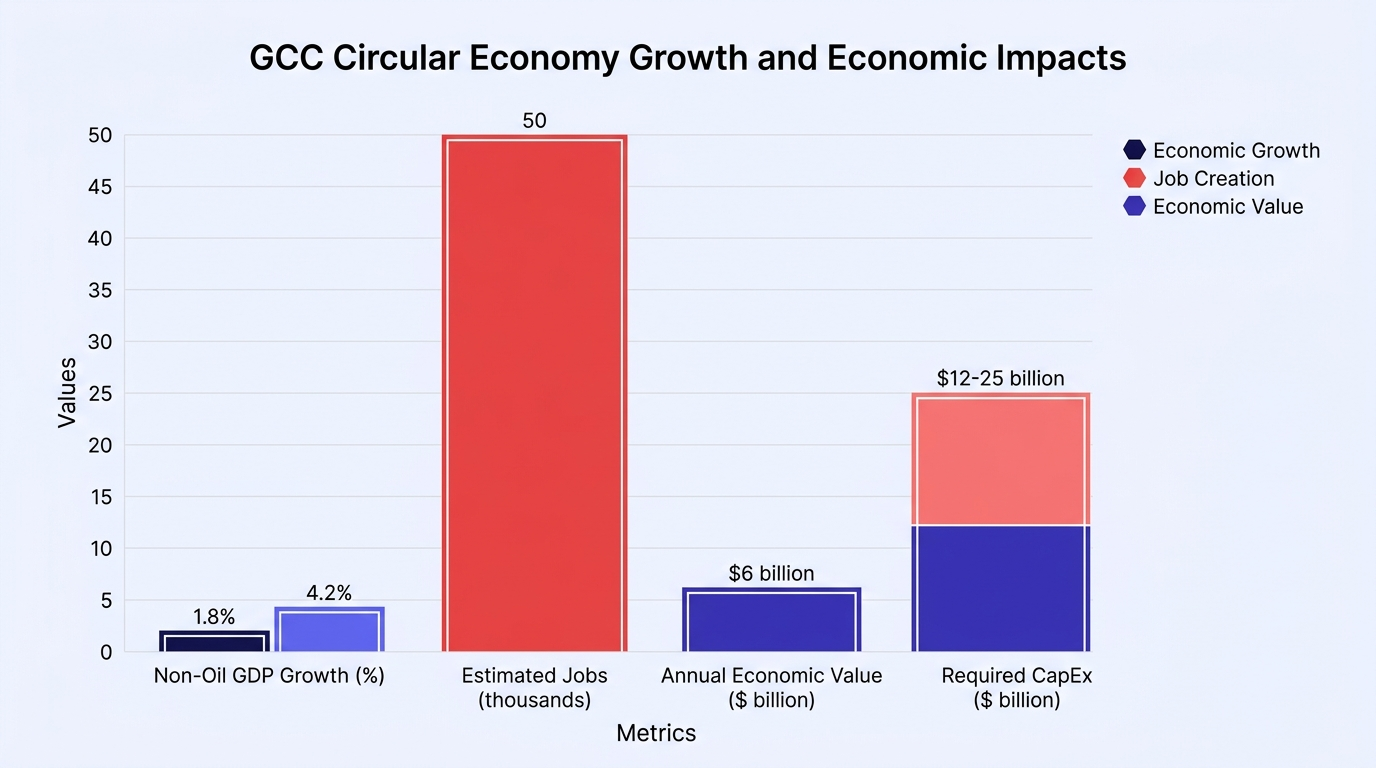
Transformation to circular economy in GCC can create 50,000 jobs.Significant investment needed, estimated at USD 12-25 billion by 2045.Circular plastics expansion could avoid 10-12 million tonnes of CO2 emissions annually.AI and chemical recycling technologies are crucial for future competitiveness.Gender and inclusion gaps persist, but opportunities in circular sectors exist.Key Questions Answered.