Food-Waste Tech and Sustainable Logistics.
AgriTech InnovationEU WorkforceFood Waste TechGreen Supply ChainsSustainable Logistics
The report explores innovations in EU food supply chains focusing on sustainable logistics and food waste management. It analyzes the social, economic, and environmental impacts of food waste, highlighting how technology like AI and IoT is transforming both waste management and workforce skills. Key trends in policy shifts and market projections provide insights into the future landscape of food logistics. The analysis is supported by case studies of pilot projects that emphasize the need for interdisciplinary collaboration and technology adoption.
Gaurav Kumar, Ghost Research
December 2025
Perspective.
PurposeTo analyze innovations and transformations in EU food supply chains focusing on logistics and waste management.
AudienceIndustry professionals, policymakers, researchers, and educators in sustainability and logistics.
Special EmphasisSustainability, innovation, policy, and workforce transformation.
42Pages of Deep Analysis
166Curated Credible Sources
3Proprietary AI Visuals
6Data Analysis Tables
$495

Gaurav Kumar
2+ Years of Experience
Sectors & Industries
Information Technology
Functions & Expertise
Data & AIStrategy & GTM
Have questions? Our Research Desk is here to help
Top Insights.
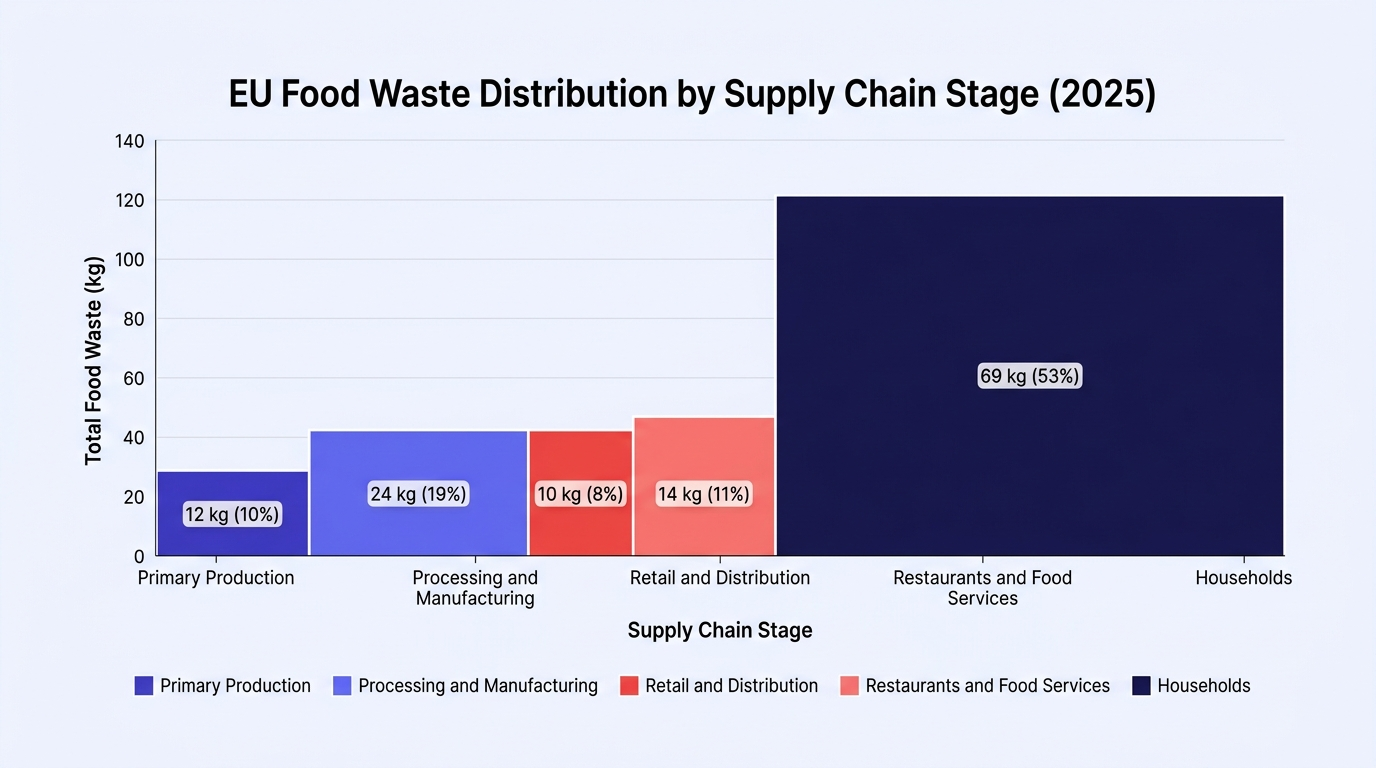
EU generates over 58 million tonnes of food waste annually.AI and IoT are critical in reducing food waste.New EU policies set binding waste reduction targets.Circular economy models are essential for sustainability.Workforce skills need transformation for digital efficiency.Key Questions Answered.
42Pages of Deep Analysis
3Proprietary AI Visuals
166Curated Credible Sources
6Data Analysis Tables
Summary.