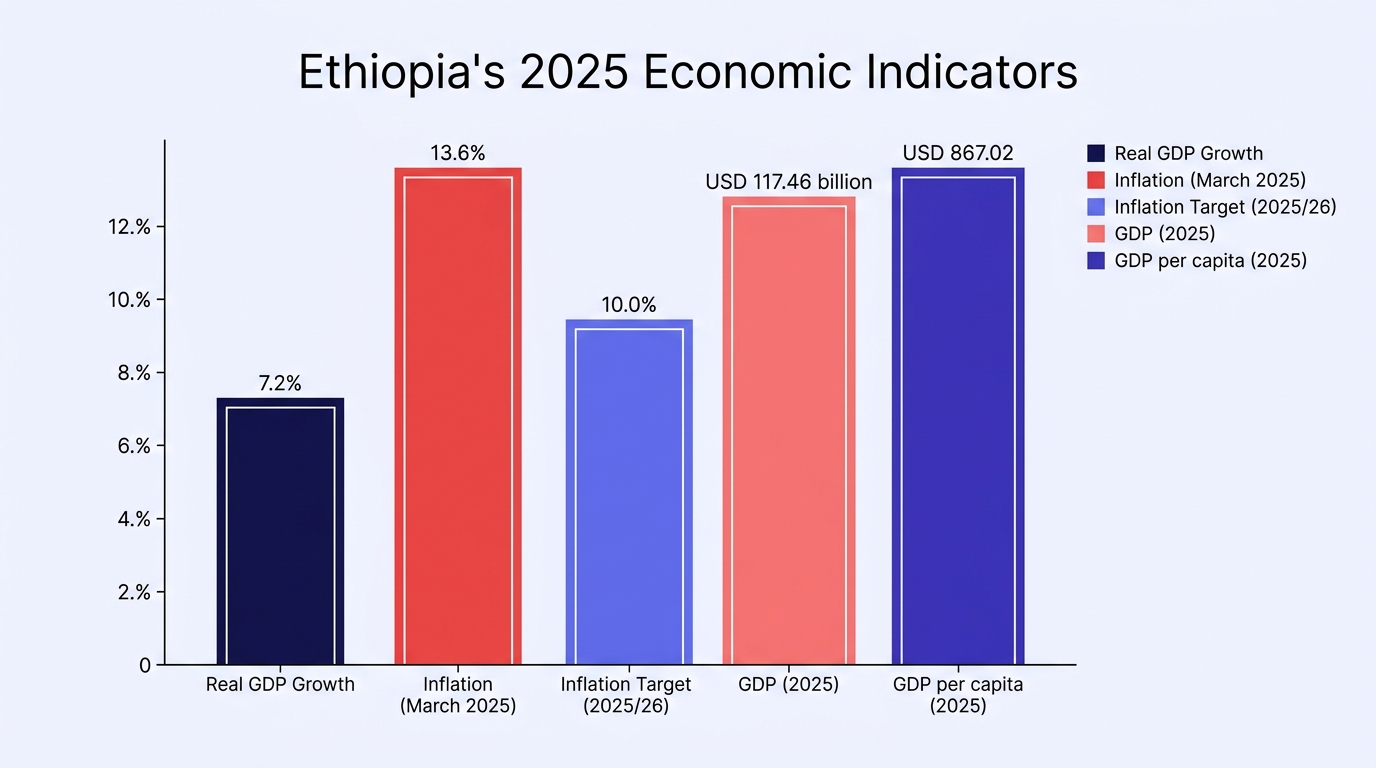
Ethiopia's Financial & Development Landscape.
AIDigital PaymentsFDIFinTechmacroeconomics
This report provides comprehensive AI-driven insights into Ethiopia’s financial outlook for 2025-2026. It emphasizes digital financial inclusion, sustainable debt management, and strategic investment opportunities. The report thoroughly analyzes Ethiopia’s economic reform trajectory within the macroeconomic context, the digital finance landscape, debt sustainability, and investment climate. Additionally, it highlights public-private partnerships and regulatory reforms crucial for financial sector modernization.
Balemlay Addis, Ghost Research
December 2025
Perspective.
PurposeTo analyze Ethiopia’s financial strategies and economic reforms for sustainable growth.
AudiencePolicymakers, investors, economists, and financial institutions.
Special EmphasisDigital inclusion, sustainable debt, impactful investments, regulatory reforms.

40Pages of Deep Analysis
74Curated Credible Sources
1Proprietary AI Visuals
4Data Analysis Tables
$495

Balemlay Addis
6+ Years of Experience
Sectors & Industries
Financials
Functions & Expertise
Finance & Investment
Have questions? Our Research Desk is here to help
Top Insights.
Ethiopia's GDP growth is projected at 6.4% to 8.9% for 2025.Mobile money users reached over 60 million by 2025.Public debt distress remains due to currency depreciation effects.The investment climate shows incremental improvement with FDI growth.Regulatory reforms align financial standards to international norms.Key Questions Answered.
40Pages of Deep Analysis
1Proprietary AI Visuals
74Curated Credible Sources
4Data Analysis Tables
Summary.