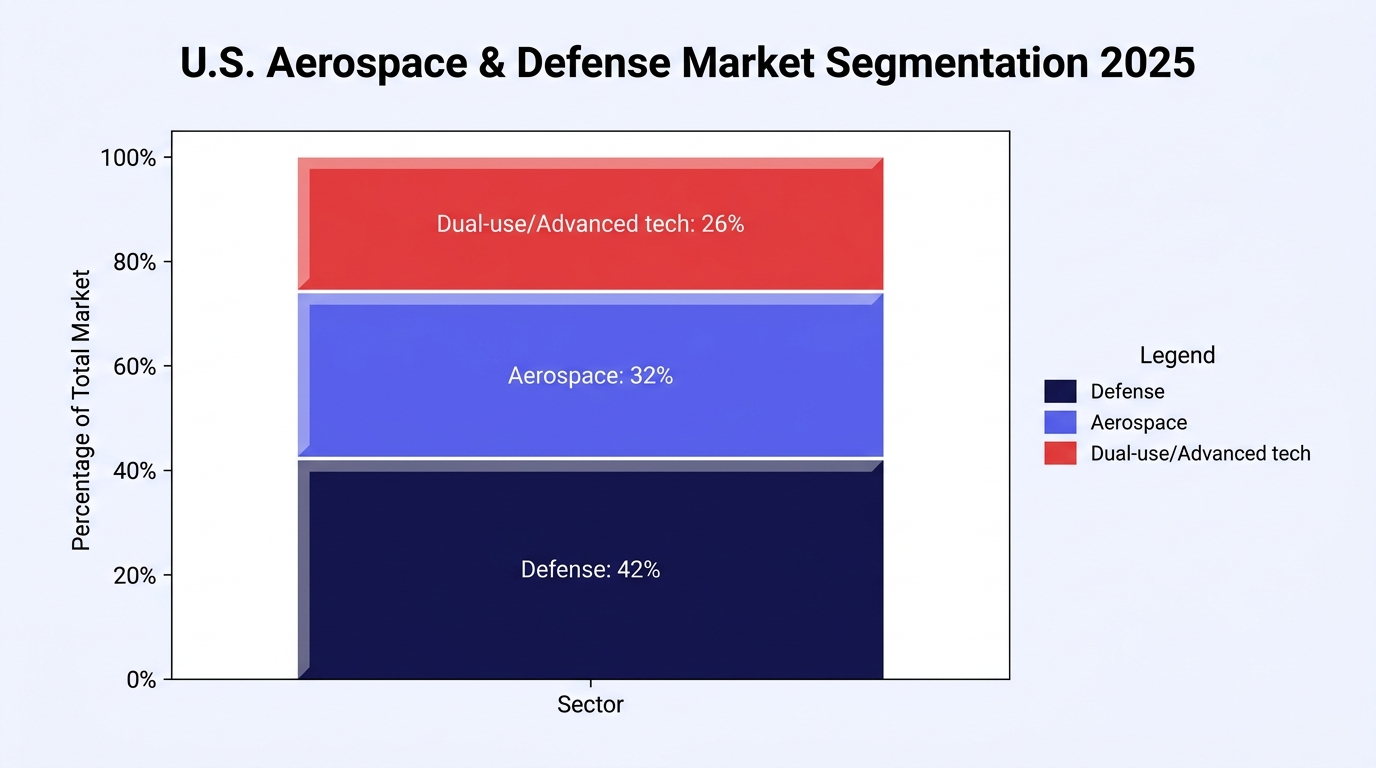
Defense & Dual-Use Manufacturing Job Trends.
Defense ManufacturingIndustrial PolicyPublic-Private PartnershipsReskilling StrategiesTechnological InnovationUS Workfoceworkforce trends
The report provides an in-depth analysis of trends within the U.S. defense and dual-use manufacturing sector, focusing on workforce trends, skill gaps, and regulatory impacts. It explores growth dynamics driven by technological advancements such as AI and smart factory integrations, reshoring efforts, and public-private partnerships. Additionally, it highlights the evolving role of labor unions and demographic shifts within the workforce. Strategic recommendations and case studies are included to guide workforce planning and development from 2026 to 2030.
Celso Gomes, Ghost Research
December 2025
Perspective.
PurposeTo analyze current and future job trends and workforce dynamics in the U.S. defense and dual-use manufacturing sector.
AudienceIndustry executives, policymakers, workforce planners, and defense manufacturers.
Special EmphasisTechnological innovation, sustainability, regulatory impacts, workforce training.

60Pages of Deep Analysis
102Curated Credible Sources
2Proprietary AI Visuals
7Data Analysis Tables
$495

Celso Gomes
10+ Years of Experience
Sectors & Industries
IndustrialsConsumer Staples
Functions & Expertise
Market IntelligenceConsumer & Retail
Have questions? Our Research Desk is here to help
Top Insights.
Defense manufacturing is integrating advanced technologies like AI and automation.There is a growing need for workforce reskilling to adapt to tech changes.Labor unions significantly impact workforce planning and negotiations.Public-private partnerships are enhancing workforce training.Future growth sectors include AI, hypersonics, and advanced air mobility.Key Questions Answered.
60Pages of Deep Analysis
2Proprietary AI Visuals
102Curated Credible Sources
7Data Analysis Tables
Summary.