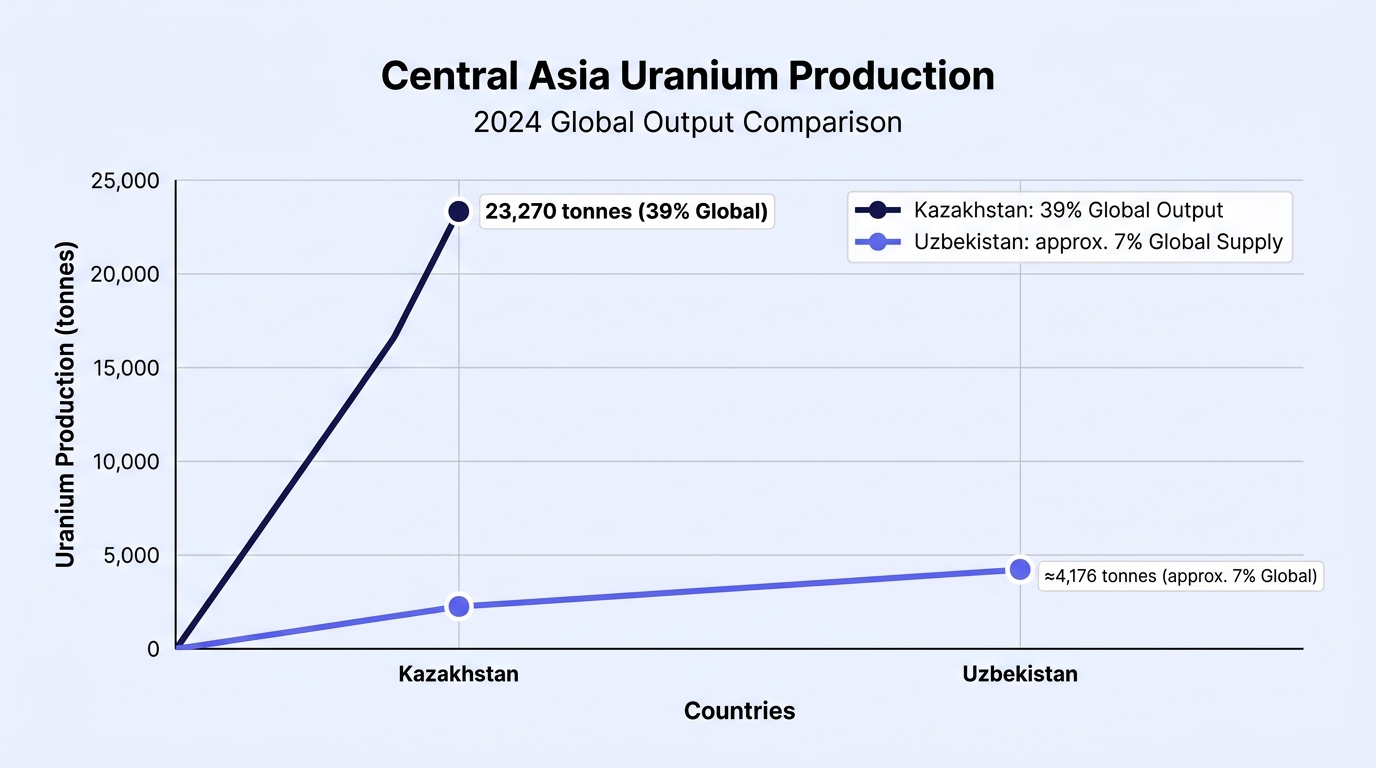
Critical Mineral Mining in Central Asia: Workforce Strategies.
Central Asia JobsCentral Asia MiningCritical MineralsGeopolitical RisksInvestment ClimateResouce Supply chainsWorkforce Strategy
The report presents an in-depth analysis of workforce strategies within the critical mineral mining industry in Central Asia, highlighting geopolitical risks, trade tariffs, and trade dependency concerns. It evaluates the region's substantial reserves of uranium, rare earth elements, and other minerals essential for global supply chains. Key insights examine the investment climate, workforce demographics, and emerging technology trends. The document also explores regulatory compliance, ESG considerations, and future workforce transformation in the sector.
Celso Gomes, Ghost Research
December 2025
Perspective.
PurposeTo analyze workforce strategies in the critical mineral mining sector in Central Asia.
AudienceInvestors, policy makers, and industry stakeholders in the mining sector.
Special EmphasisFocus on geopolitics, technology adoption, ESG, and workforce transformation.
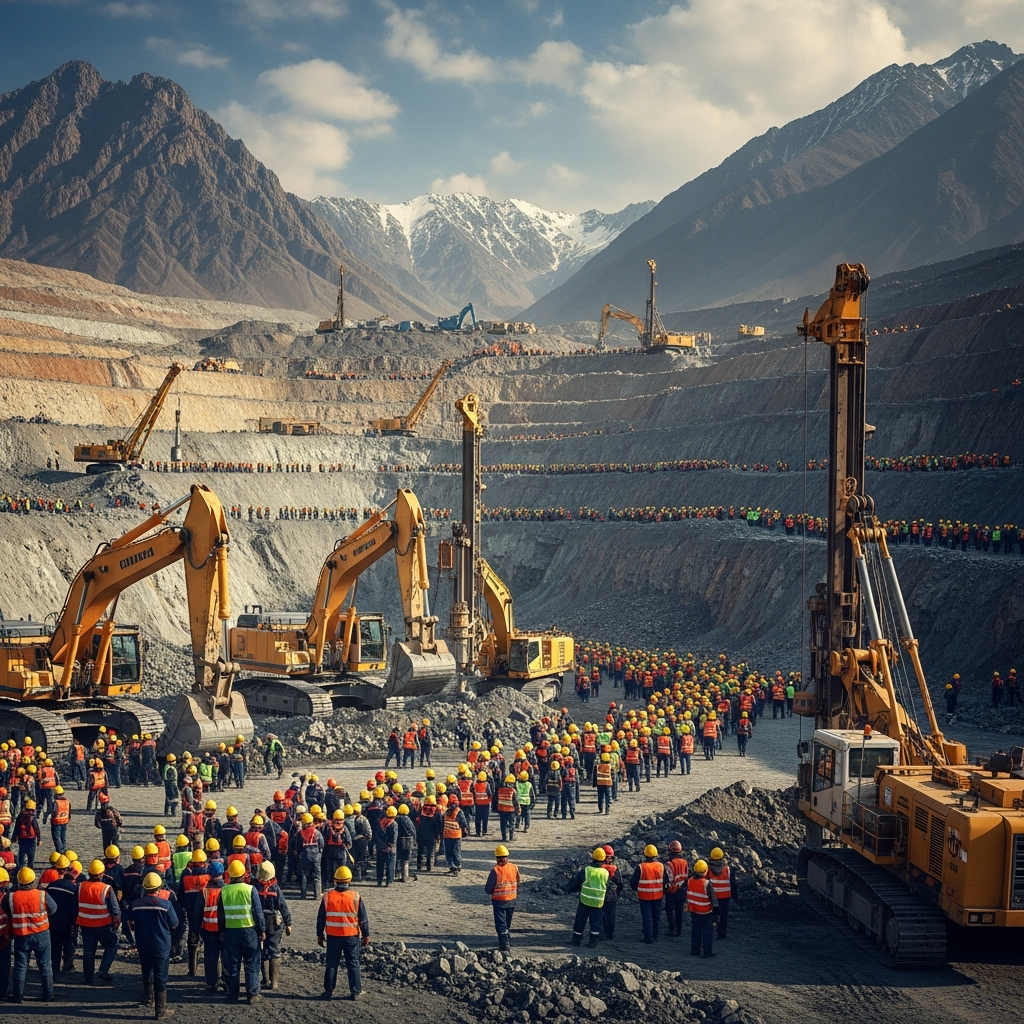
65Pages of Deep Analysis
102Curated Credible Sources
2Proprietary AI Visuals
8Data Analysis Tables
$495

Celso Gomes
10+ Years of Experience
Sectors & Industries
IndustrialsConsumer Staples
Functions & Expertise
Market IntelligenceConsumer & Retail
Have questions? Our Research Desk is here to help
Top Insights.
Central Asia is pivotal for critical mineral supply, offering an alternative to Chinese dominance.Technological advancements like AI and automation are reshaping mining operations.Investment climates vary, with some regions enhancing regulatory frameworks to attract foreign capital.ESG considerations and compliance costs are influencing investment decisions.Geopolitical risks from major powers impact regional supply chain dynamics.Key Questions Answered.
65Pages of Deep Analysis
2Proprietary AI Visuals
102Curated Credible Sources
8Data Analysis Tables
Summary.