Co-working Evolution Post-Hybrid Era.
Co-Working TrendsFacility ManagementFuture workforceGlobal OfficesHybrid Work
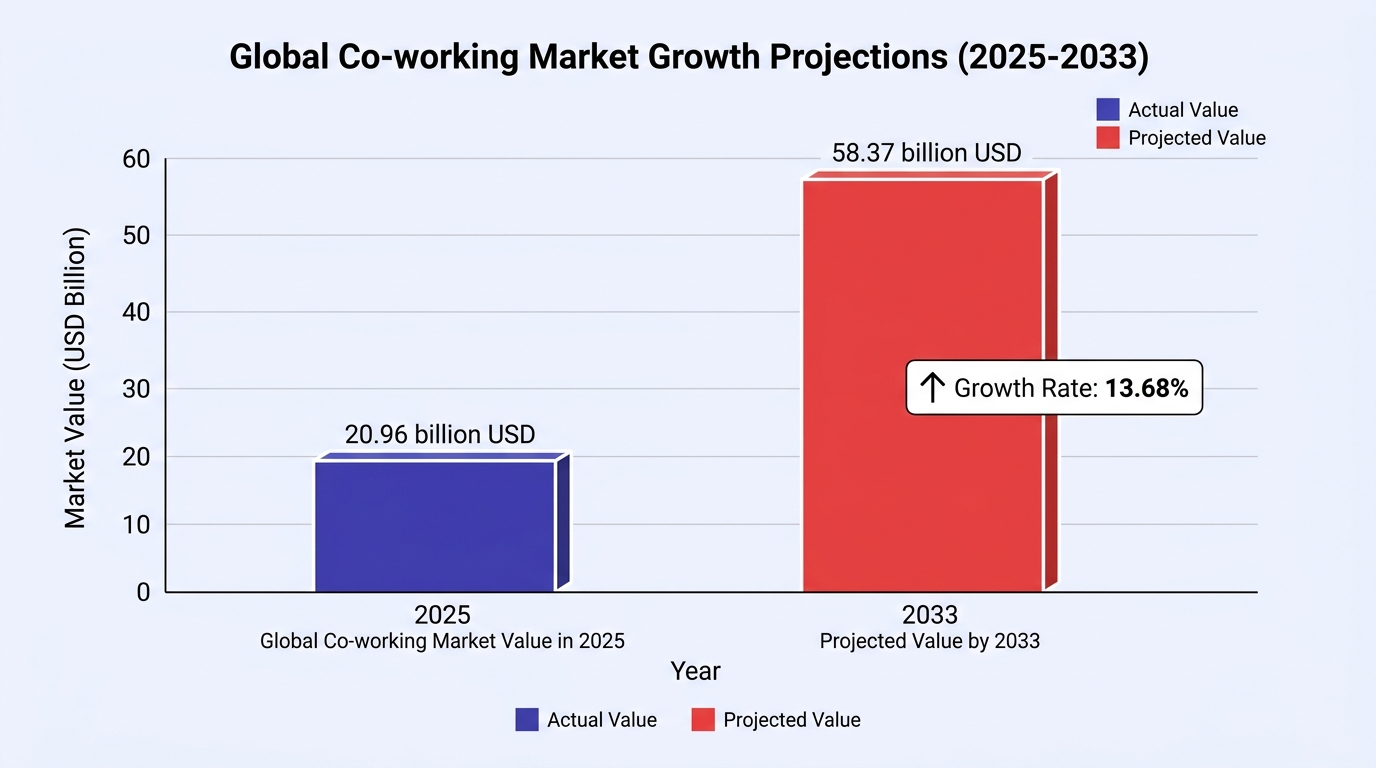
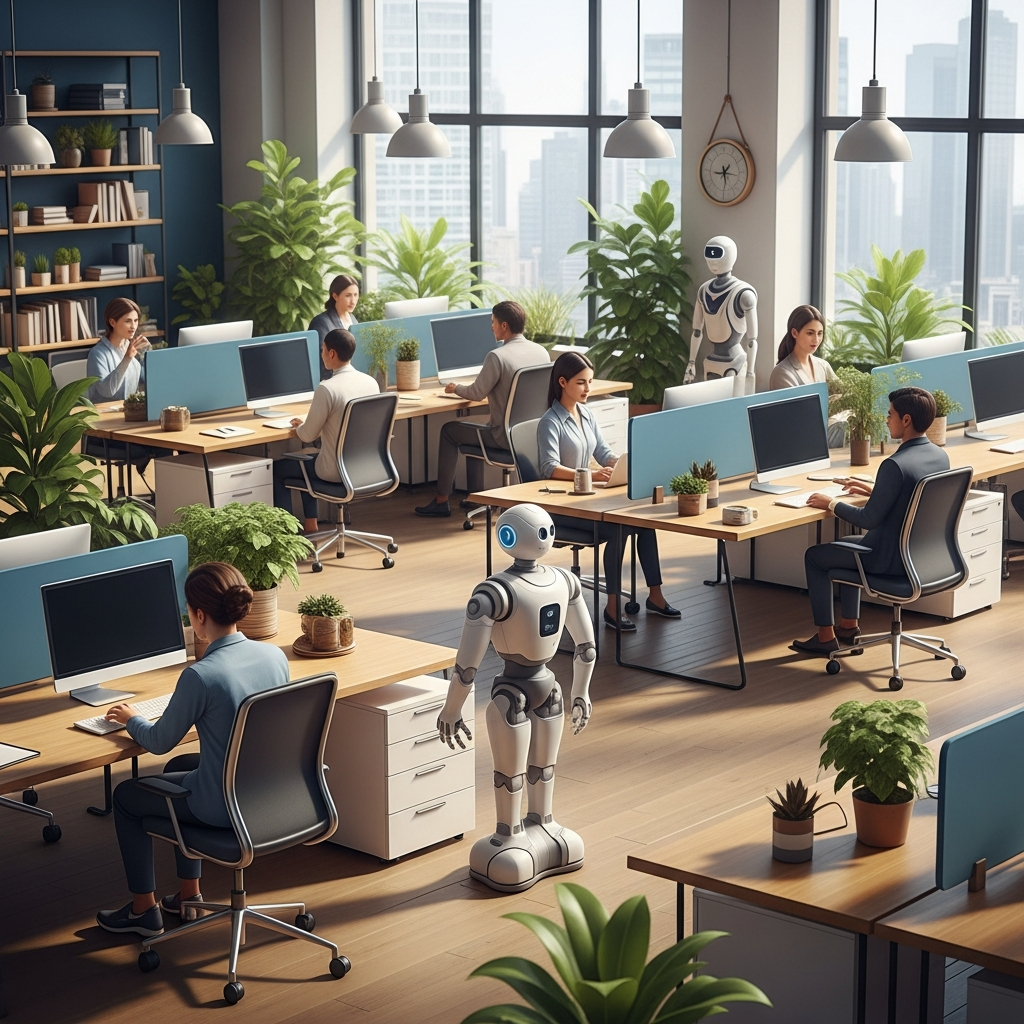
This report explores the transformation of co-working spaces in the post-hybrid era, focusing on strategic global planning, business model innovation, and technology integration. It examines how AI is reshaping co-working environments, blending physical and digital interactions to enhance flexibility and community engagement. The report also covers economic dynamics, sustainability practices, and the evolving role of facility management. Comprehensive in scope, it provides insights into global trends and regional variations in co-working adoption.
Vivek Goswami, Ghost Research
December 2025
Perspective.
PurposeTo analyze the evolution of co-working spaces and facility management in the post-hybrid era, focusing on strategic planning and innovation.
AudienceCorporate leaders, facility managers, policymakers, and co-working operators.
Special EmphasisInnovation in business models, sustainability, and AI integration.
54Pages of Deep Analysis
105Curated Credible Sources
2Proprietary AI Visuals
4Data Analysis Tables
$495

Vivek Goswami
11+ Years of Experience
Sectors & Industries
IndustrialsConsumer StaplesEnergy
Functions & Expertise
Market IntelligenceStrategy & GTM
Have questions? Our Research Desk is here to help
Top Insights.
Co-working spaces are transitioning to management agreements for more flexibility.AI integration is enhancing co-working environments, enabling predictive analytics and personalized experiences.Demand for co-working spaces is increasing in suburban and smaller towns.Sustainability practices such as LEED certifications are becoming standard.Hybrid work models are mainstream, adopted by 60% of companies by 2025.Key Questions Answered.
54Pages of Deep Analysis
2Proprietary AI Visuals
105Curated Credible Sources
4Data Analysis Tables
Summary.