Circular Economy Approaches in GCC E-Waste.
Circular EconomyRegulationSustainabilityWaste Managemente-wasterecycling
The report explores e-waste management strategies in the GCC, focusing on circular economy models and their alignment with national climate goals. It outlines investment opportunities, the regulatory landscape, and technologies transforming waste management. The findings suggest significant untapped economic potential in e-waste recovery and greater emphasis on sustainability, Social and Governance (ESG) impacts. The report provides strategic roadmaps for businesses and governments, highlighting the critical role of policy enforcement, infrastructure investment, and digital tools in optimizing resource recovery.
Piyush Yadav, Ghost Research
December 2025
Perspective.
PurposeTo analyze GCC e-waste management and circular economy strategies.
AudienceBusiness leaders, policymakers, investors, and environmental strategists.
Special EmphasisSustainability, technology, policy innovation.

32Pages of Deep Analysis
120Curated Credible Sources
0Proprietary AI Visuals
3Data Analysis Tables
$495

Piyush Yadav
1+ Years of Experience
Sectors & Industries
Information Technology
Functions & Expertise
Data & AI
Have questions? Our Research Desk is here to help
Top Insights.
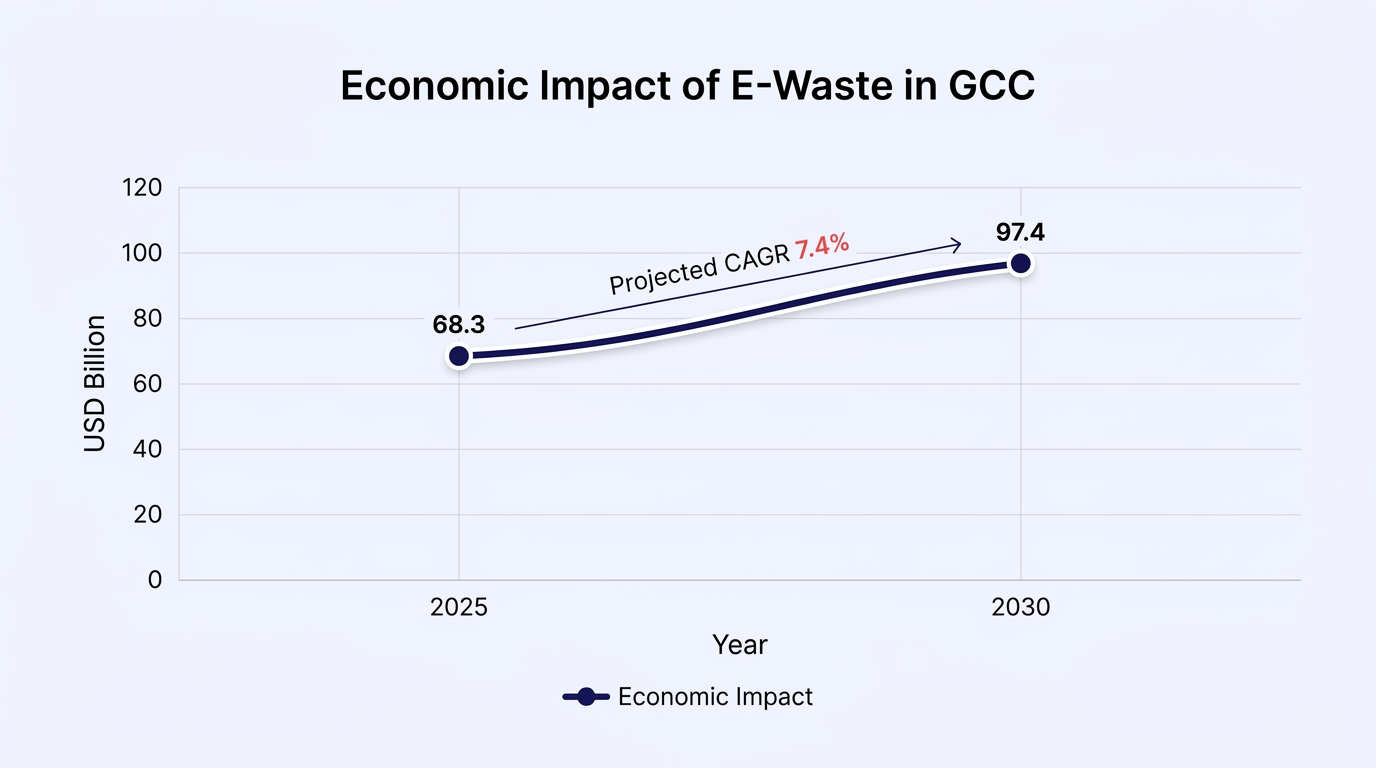
The GCC's e-waste potential is largely untapped, with opportunities to generate significant economic value.National strategies like Saudi Vision 2030 emphasize sustainability and circular economy.AI and blockchain technologies are critical for enhancing e-waste management efficiencies.Policy enforcement and infrastructure investments are key to unlocking waste management potential.The circular economy model could prevent up to 1.5 billion tonnes of CO2 emissions by 2040.Key Questions Answered.
32Pages of Deep Analysis
0Proprietary AI Visuals
120Curated Credible Sources
3Data Analysis Tables
Summary.