AI Automation in Telecom: Opex Reduction vs Network and Service Quality Risk.
AI AutomationDigital AutomationNetwork qualityService qualityTelecom OpexTelecom trendsWorkforce Automation
This report explores the impact of AI automation on operational expenditure (Opex) in the telecom industry, balancing cost efficiencies with potential risks to network and service quality. It highlights how AI is transforming telecom operations into more autonomous, intent-driven systems, offering significant Opex reductions. The report emphasizes the importance of governance and safety in leveraging AI automation effectively while maintaining network integrity. It provides insights into regional adoption trends, challenges, and future outlooks for AI-driven telecom automation.
Mallika Katare, Ghost Research
February 2026
Perspective.
PurposeTo analyze the impact of AI automation on Opex and network service quality in telecom.
AudienceTelecom industry leaders, technology strategists, and policy makers.
Special EmphasisEmphasis on balancing cost reduction with service quality, innovation, and governance.

88Pages of Deep Analysis
60Curated Credible Sources
16Proprietary AI Visuals
16Data Analysis Tables
$495

Mallika Katare
6+ Years of Experience
Sectors & Industries
Information TechnologyCommunication Services
Functions & Expertise
Market IntelligenceStrategy & GTM
Have questions? Our Research Desk is here to help
Top Insights.
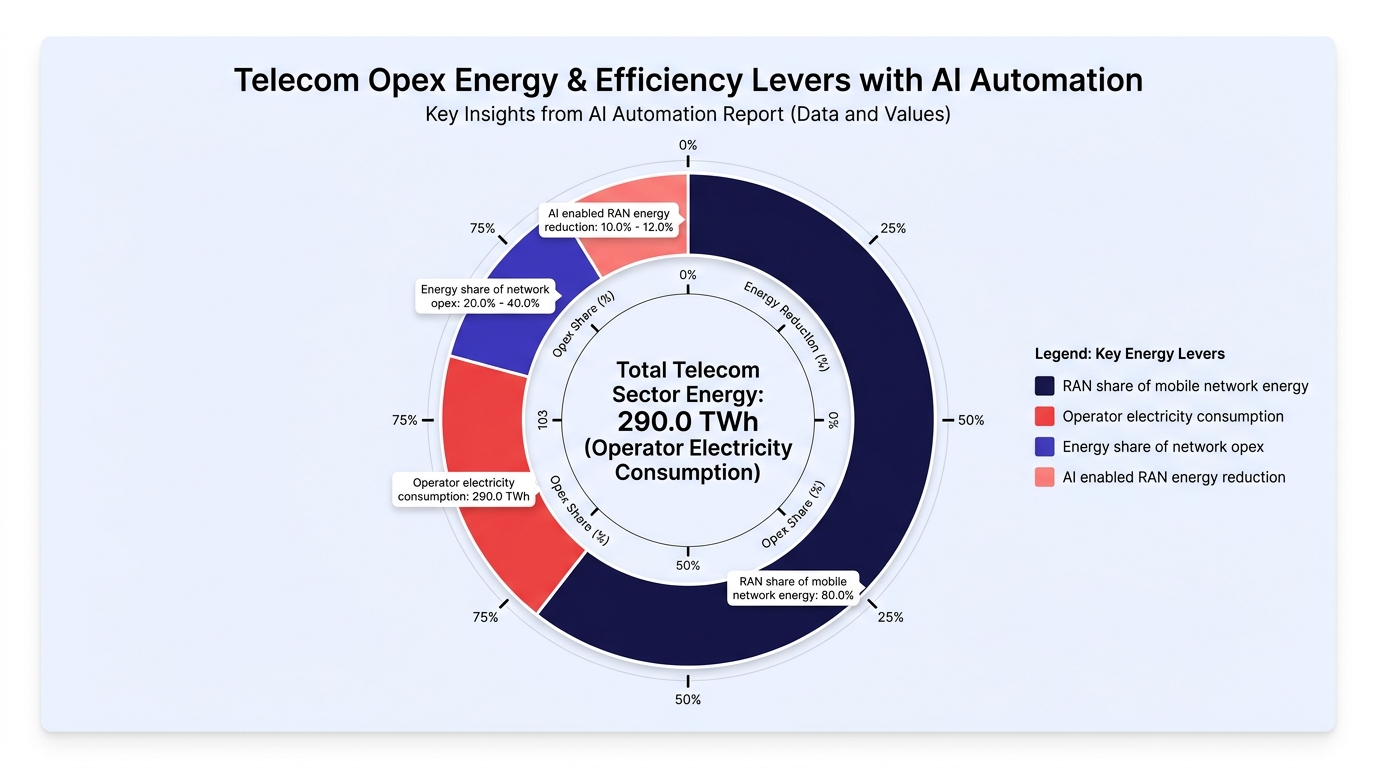
AI automation is significantly reducing Opex in telecom by streamlining operations into closed-loop systems.Balancing cost efficiencies with network and service quality is critical to achieving successful automation.Regional adoption varies, influenced by factors such as regulatory policies and technological advancements.Energy optimization stands out as a high-impact area for AI-driven cost reductions.Strong governance and safety protocols are essential to prevent automation-induced quality regressions.Key Questions Answered.
88Pages of Deep Analysis
16Proprietary AI Visuals
60Curated Credible Sources
16Data Analysis Tables
Summary.