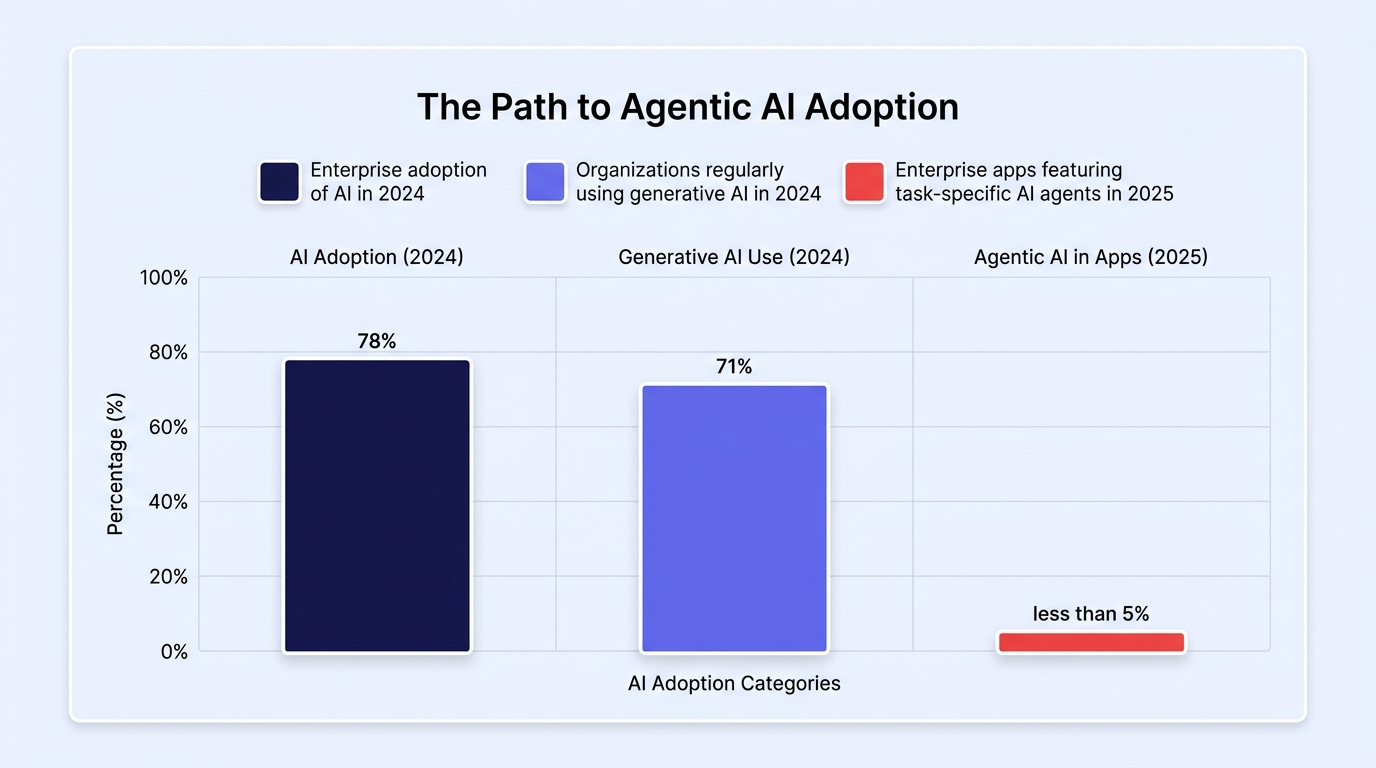
Agentic AI's 2026 Inflection: From 5% to 40% Enterprise App Penetration.
AI IntegrationAgentic AIEnterprise ApplicationsIT Sector GrowthWorkforce Transformationenterprise ai agents
The report explores the projected rise of Agentic AI in enterprises from 5% to 40% by 2026. It highlights the shift from traditional AI to autonomous, goal-driven systems that optimize workflows and decision-making. The report discusses strategic implications, industry-specific adoption patterns, and technological infrastructure requirements. It also addresses challenges like integration complexity, governance, and workforce transformation needed to scale these systems effectively.
Ashwath S. Baskaran, Ghost Research
March 2026
Perspective.
PurposeThe report aims to analyze the growth and impact of Agentic AI applications within enterprise environments by 2026.
AudienceIT sector management, enterprise leaders, and AI strategists.
Special EmphasisFocus on innovation, governance, and enterprise integration.

112Pages of Deep Analysis
155Curated Credible Sources
29Proprietary AI Visuals
42Data Analysis Tables
$495

Ashwath S. Baskaran
3+ Years of Experience
Sectors & Industries
Information Technology
Functions & Expertise
Data & AIMarket Intelligence
Have questions? Our Research Desk is here to help
Top Insights.
Agentic AI will penetrate 40% of enterprise applications by 2026.Adoption is driven by increased demand for productivity and autonomous systems.Significant changes are expected in workforce dynamics and skill requirements.Governance and integration complexity are major challenges for implementation.Market growth is strongest in North America, China, and Europe.Key Questions Answered.
112Pages of Deep Analysis
29Proprietary AI Visuals
155Curated Credible Sources
42Data Analysis Tables
Summary.