
Market Trends Influencing Clean Energy Project Adoption Worldwide
Analyze market dynamics shaping clean energy project adoption worldwide using intelligence from Ghost Research

The global energy transition is being shaped by rapidly shifting demand dynamics, economic priorities, and sustainability commitments across industries. A modern Clean Energy Project is no longer viewed as an experimental sustainability initiative; it has become a core component of long-term infrastructure planning and energy security strategies. Governments, private enterprises, and infrastructure investors are accelerating clean energy adoption to address rising power consumption, reduce environmental impact, and stabilize energy costs in volatile global markets.
The expansion of clean energy initiatives is influenced by evolving market trends, technological advancement, policy transformation, and investment restructuring across energy ecosystems. Understanding these trends enables organizations to evaluate long-term energy infrastructure strategies and align operational expansion with sustainable power generation frameworks.
Demand Trends Driving Clean Energy Project Expansion
- Rising Global Energy Consumption: Urbanization, industrial expansion, automation technologies, and digital infrastructure growth are increasing power demand, accelerating clean energy deployment to support efficient and low-emission energy generation.
- Corporate Sustainability Commitments: Organizations are integrating renewable energy sourcing to meet emission reduction targets and strengthen environmental performance, significantly increasing large-scale clean energy investments.
- Technological Innovation Acceleration: Advancements in solar efficiency, wind turbine capacity, and energy storage systems are improving renewable energy reliability, scalability, and cost competitiveness with conventional power sources.
- Electrification Expansion: Growth of electric vehicles, electrified manufacturing systems, and smart city infrastructure is increasing demand for stable and large-scale renewable power generation.
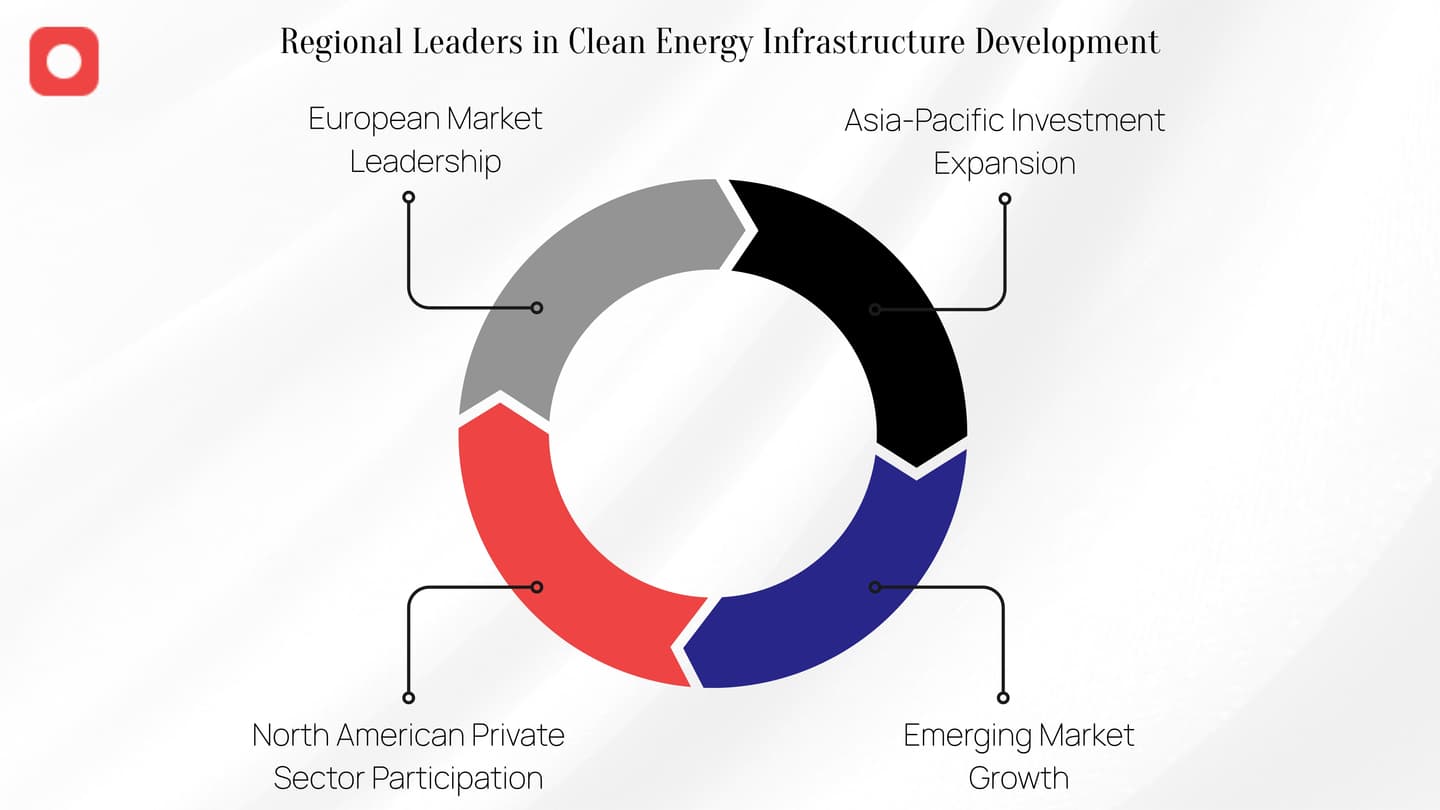
Regional Leaders in Clean Energy Infrastructure Development
Clean energy adoption varies significantly across geographic markets based on regulatory frameworks, resource availability, and infrastructure investment priorities. Several regions are demonstrating accelerated clean energy deployment due to favorable policy incentives and long-term energy transition strategies.
- European Market Leadership: Strong carbon reduction targets, government subsidies, and cross-border energy integration are accelerating offshore wind and solar infrastructure growth.
- Asia-Pacific Investment Expansion: Rapid industrialization, urban growth, and government-backed renewable programs are driving large-scale solar and hydroelectric infrastructure development.
- North American Private Sector Participation: Technology firms, manufacturing industries, and infrastructure developers are investing in renewable integration for sustainability goals and long-term cost efficiency, supported by government incentives.
- Emerging Market Growth: Latin America, the Middle East, and Africa are integrating renewable infrastructure into national energy strategies to support economic development and reduce fossil fuel dependency.
Energy Pricing Dynamics Influencing Renewable Growth
Energy price volatility remains one of the most significant factors influencing clean energy adoption. Fluctuating fossil fuel costs, geopolitical supply disruptions, and changing global energy trade patterns often create uncertainty in traditional energy markets. Clean energy infrastructure provides an opportunity for organizations and governments to reduce exposure to unpredictable fuel price fluctuations.
Long-term renewable infrastructure investments offer predictable operational cost structures because renewable power generation relies on natural resource availability rather than fuel procurement. Once infrastructure installation is completed, operational costs are typically lower compared to conventional power generation systems. This cost predictability encourages enterprises to integrate renewable power sourcing into long-term operational planning frameworks.
Energy storage technologies are also playing a crucial role in strengthening renewable infrastructure cost efficiency. Advanced storage systems allow operators to capture excess renewable energy during peak generation periods and distribute stored energy during high demand cycles. This capability improves renewable energy utilization efficiency and enhances financial returns on infrastructure investment.
Power purchase agreements between renewable infrastructure operators and corporate energy consumers are further strengthening clean energy adoption. These agreements provide long-term revenue stability for renewable infrastructure developers while offering predictable energy pricing models for corporate consumers.
.jpg&w=1440&q=75)
Barriers Slowing Clean Energy Deployment
- Infrastructure Integration Complexity: Renewable energy is often generated in resource-rich remote regions, requiring extensive transmission infrastructure to efficiently distribute power to consumption hubs.
- High Capital Investment Requirements: Utility-scale renewable projects involve significant upfront funding, complex financing structures, and long development timelines that can delay deployment.
- Regulatory Policy Uncertainty: Changing subsidy frameworks, environmental approval processes, and evolving energy regulations create planning and investment challenges.
- Renewable Supply Chain Constraints: Increasing global demand for renewable equipment and specialized raw materials can lead to sourcing delays and procurement disruptions.
Advancing Clean Energy Intelligence for Strategic Infrastructure Growth
Scaling renewable infrastructure requires more than tracking adoption trends in isolation. Understanding how demand growth, regulatory transformation, and investment performance interact allows organizations to evaluate where large-scale clean energy deployment can deliver sustained infrastructure value. Ghost Research supports this evaluation by examining how regional adoption momentum, infrastructure scalability potential, and cost-efficiency pathways evolve across global energy markets.
This analytical work translates into decision-oriented insights such as renewable adoption trajectory mapping, regional infrastructure investment prioritization, regulatory exposure evaluation, and renewable supply chain performance interpretation. These insights help energy developers, infrastructure investors, and industrial enterprises identify expansion pathways that balance technical feasibility with long-term commercial viability.
Growing energy consumption requirements and infrastructure modernization goals are increasing deployment complexity across renewable ecosystems. By continuously monitoring market adoption signals and infrastructure investment performance patterns, Ghost Research helps stakeholders interpret expansion challenges, navigate infrastructure risk environments, and develop renewable deployment strategies that reinforce long-term energy system resilience.
Latest blog posts.
All Posts