AI Electricity Demand: Grid Impact & Strategies 2026
The Great Grid Subsidy Debate: Who Pays When AI Drives Up Everyone's Electric Bill?.
Generating visualization...
The Great Grid Subsidy Debate: Who Pays When AI Drives Up Everyone's Electric Bill?.
This report provides a comprehensive examination of the impact of AI-driven electricity demand in North America, focusing on financing, policy, and employment consequences within the energy sector. It highlights the anticipated rise in data center energy consumption and its implications on the grid's reliability and affordability. The report analyzes modern grid cost recovery models, emerging tariff structures, and regulatory reforms in the U.S. and Canada. Additionally, it explores how this demand surge affects employment, with particular attention to the construction and operation of data centers.
AI Data CentersElectricity DemandGrid InfrastructurePolicy ReformsTariff Structuresgrid cost sharing
PurposeTo examine the impact of AI-driven electricity demand on grid infrastructure and economic incentives.
AudiencePolicy makers, energy sector professionals, and economic analysts.
Report LengthComprehensive
Focus Areas.
Industries JobsEnergy sector; focus on grid operations, data centers, and construction jobs.
Geographic AreasNorth America, including the U.S. and Canada.
Special EmphasisEmphasis on policy, sustainability, and economic impacts.
Report Layout.
Introduction and Problem Statement
Current context of AI-driven electricity demand and affordability concerns
Energy Infrastructure and AI Ecosystem Overview
Contemporary state of North American grid and AI infrastructure
Get the Insights You Need — Download Now.
Insights.
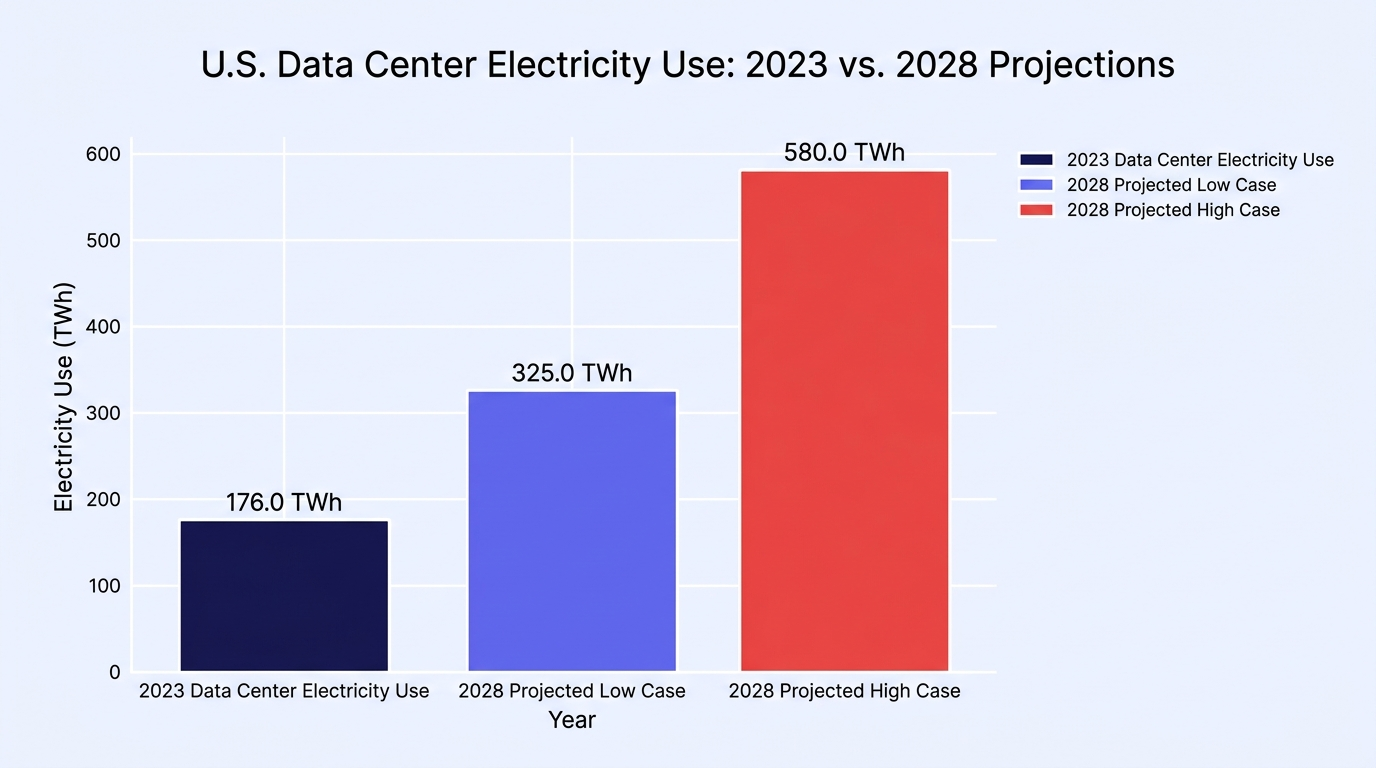
AI-driven electricity demand is projected to reach up to 12% of U.S. consumption by 2028.Emerging tariff structures are being introduced to address high-load users.Job creation is heavily concentrated in the construction phase of data centers.Environmental considerations are crucial for integrating AI workloads with energy systems.Canadian and U.S. policies are advancing to specifically address data center growth.
Key Questions Answered.
GHOST Research combines the power of Traditional Research & LLMs.
-Sources of Curated Credible Data
28+Major Business Languages
FractionCost of traditional Research
Live StreamOf information for latest insights
Powered byProprietary AI Research Engine generates deeper insights than traditional Market Research
1000+ Subject matter expertsIndustry leading Research Experts across topics, sectors & geographies publish insightful reports
Evolution of hyperscale and modular data center models
Integration of AI workloads with energy systems and sovereignty considerations
Grid Financing, Tariffs, and Cost Allocation Mechanisms
Modern models of grid cost recovery and rate design
Emerging tariff structures for high-load users and data centers
Policy and Regulatory Landscape in North America
Federal initiatives and executive directives on AI infrastructure and energy
State and provincial regulatory reforms and accountability measures
Stakeholder Mapping and Roles
Federal, state/provincial, and local government actors
Utilities (traditional and renewable) and grid operators
Residential, commercial, and community stakeholders
Workforce, labor groups, and local advocacy organizations
Labor Market and Workforce Dynamics
Employment trends in AI data center construction and operations
Workforce shifts in traditional energy sectors
Regional labor impacts and case examples
Economic Analysis of AI-Driven Energy Demand
Cost-benefit frameworks for AI infrastructure subsidies and investments
Local economic multipliers of data center projects
Rate impacts across consumer segments and jurisdictions
Environmental Sustainability and Resilience
Carbon and water footprint of AI infrastructure expansion
Regional Case Studies in North America
Qualitative Assessment of Current Approaches
Effectiveness of existing regulatory and policy frameworks
Future Grid and Infrastructure Requirements
Projected capacity and modernization needs through 2030
Storage, flexibility, and transmission challenges
Strategic Policy Recommendations
Innovative pricing and long-term power procurement models
Infrastructure planning aligned with AI and energy convergence
Workforce development and regional capacity building
Implementation Pathways and Governance
Federal-state/provincial coordination and implementation challenges
Stakeholder engagement and community benefit frameworks
Metrics, monitoring, and evaluation frameworks
Conclusion
Recap of key structural insights
References
Comprehensive reference list
Appendices
Methodological framework and data sources
Comparative energy consumption tables by region
Regulatory and tariff summary by jurisdiction
2
How are tariff structures changing to accommodate AI-driven demand?