Supply Chain Re-localization: Policy Implications and Outlook.
Economic ResiliencePolicy ImplicationsSupply Chain Re-localization
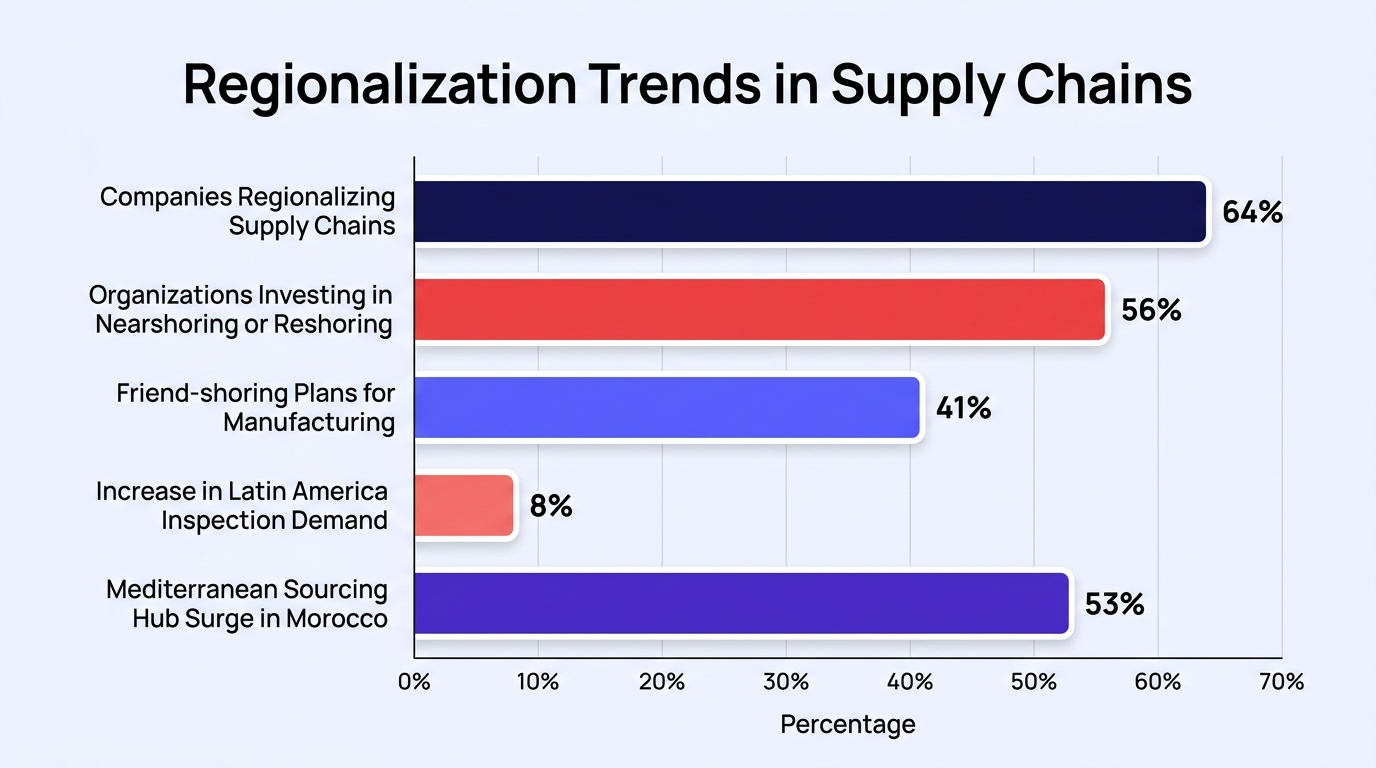
This report presents a comprehensive analysis of the current and future policy landscape affecting global supply chain re-localization. It explores trends in reshoring, nearshoring, and friend-shoring strategies, examining economic impacts and strategic drivers such as geopolitical risks and sustainability. The report highlights regional frameworks like the USMCA and the EU’s Critical Raw Materials Act while addressing priority sectors including advanced manufacturing and healthcare. It offers strategic recommendations for policymakers focusing on resilience, diversification, and sustainability in supply chain management.
Celso Gomes, Ghost Research
October 2025
Perspective.
PurposeTo provide policymakers with insights and strategic guidance on re-localizing supply chains amid geopolitical and economic shifts.
AudiencePrimarily intended for policymakers, government officials, and industry leaders involved in supply chain management and economic policy formulation.
Special EmphasisEmphasis on sustainability, economic resilience, and policy frameworks.

32Pages of Deep Analysis
160Curated Credible Sources
0Proprietary AI Visuals
0Data Analysis Tables
$495

Celso Gomes
10+ Years of Experience
Sectors & Industries
IndustrialsConsumer Staples
Functions & Expertise
Market IntelligenceConsumer & Retail
Have questions? Our Research Desk is here to help
Top Insights.
Regionalization is now a dominant supply chain strategy.Geopolitical tensions are driving allied sourcing strategies.Digital infrastructure is crucial for supply chain resilience.Nearshoring is preferred over full reshoring to balance efficiency.Localization strategies create jobs but also increase labor costs.Key Questions Answered.
32Pages of Deep Analysis
0Proprietary AI Visuals
160Curated Credible Sources
0Data Analysis Tables
Summary.