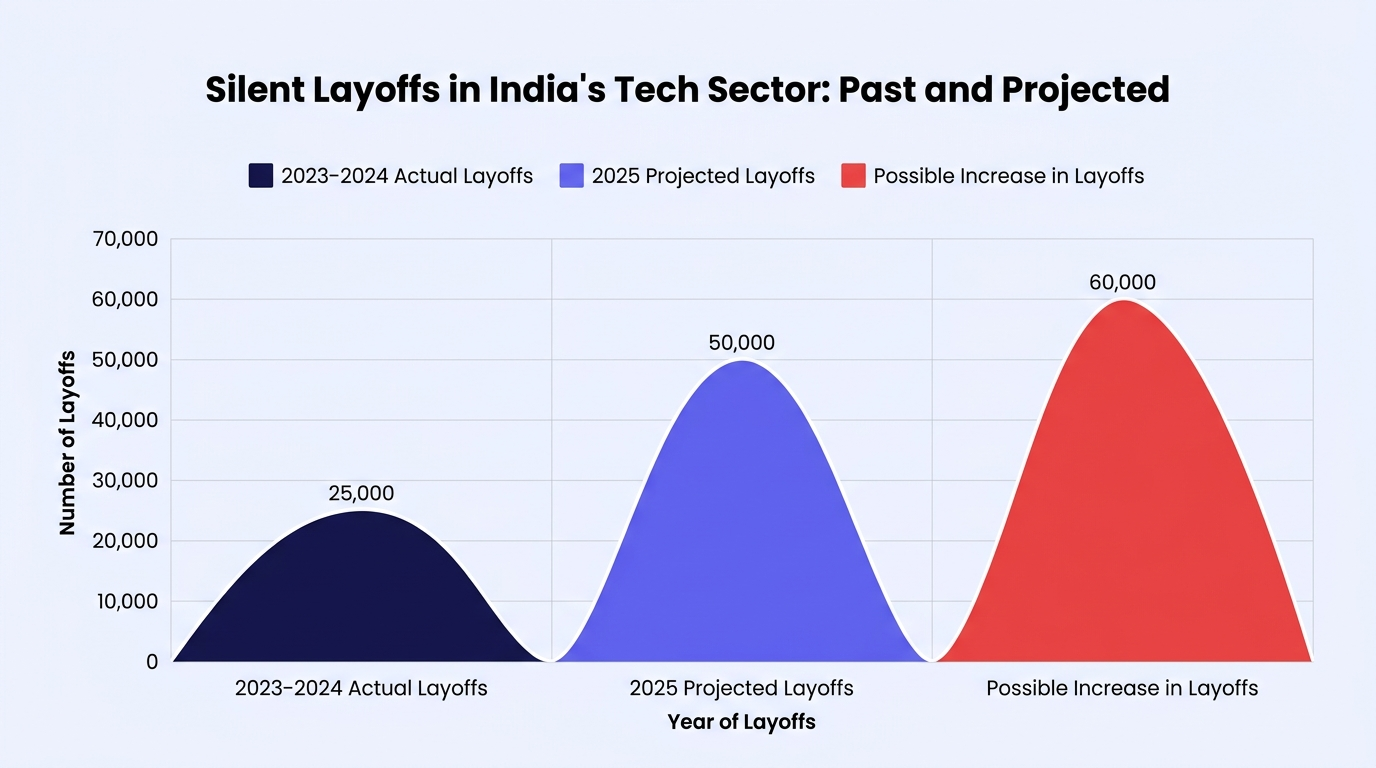
Silent Layoffs in Tech.
AI ImpactHR TransformationIndia workforceIndian IT SectorJob loss analysisSilent layoffsTech industry
The report delves into the phenomenon of 'silent layoffs' affecting over 50,000 jobs in India's tech sector. These covert workforce reductions are primarily driven by AI adoption and economic pressures. The report highlights the challenges faced by mid-level tech professionals and investigates the impact on major firms like TCS, Infosys, and Wipro. It also discusses legal, ethical, and economic implications and provides recommendations for employers, policymakers, and employees to address these risks.
Rakshit Badyal, Ghost Research
November 2025
Perspective.
PurposeTo provide an in-depth analysis of silent layoffs in India’s tech sector, focusing on its causes and impacts.
AudienceIndustry leaders, policymakers, tech professionals, and investors.
Special EmphasisEmphasis on AI-driven restructuring and economic pressures.

63Pages of Deep Analysis
87Curated Credible Sources
3Proprietary AI Visuals
8Data Analysis Tables
$495

Rakshit Badyal
1+ Years of Experience
Sectors & Industries
IndustrialsInformation Technology
Functions & Expertise
Market Intelligence
Have questions? Our Research Desk is here to help
Top Insights.
Silent layoffs have affected over 50,000 Indian tech jobs due to AI and economic pressures.Major IT firms like TCS and Infosys are at the center of these layoffs.Legal frameworks inadequately protect employees from such covert layoffs.Mid-level professionals are disproportionately affected, facing exclusion and stress.Recommendations include updating labor laws and improving transparency.Key Questions Answered.
63Pages of Deep Analysis
3Proprietary AI Visuals
87Curated Credible Sources
8Data Analysis Tables
Summary.