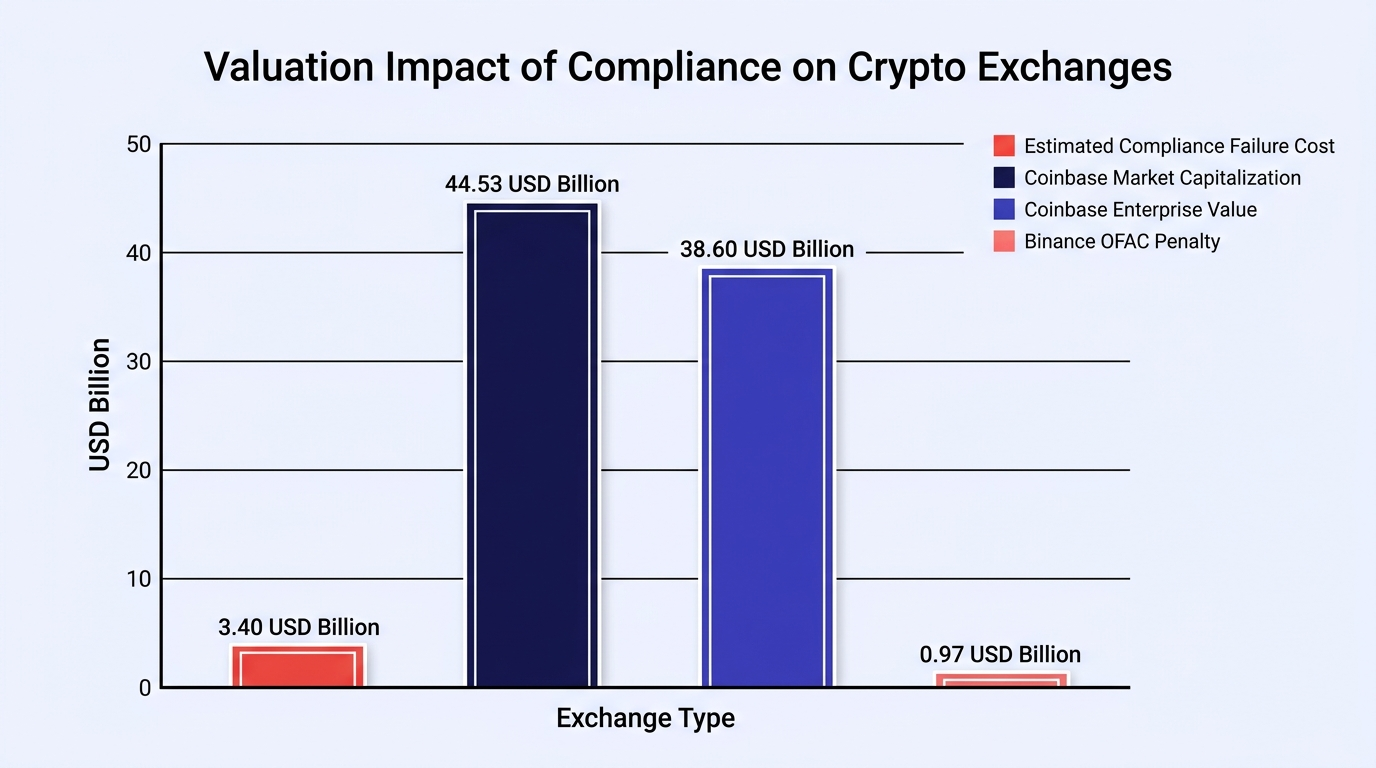
Crypto Compliance Economics: Impact on Exchanges
Generating visualization...
Crypto Compliance Economics: Survival Cost for Exchanges. This comprehensive report analyzes the economic impact of regulatory compliance on crypto exchanges. By drawing parallels to trade tariffs, the report explores the cost implications and strategic positioning required for exchanges to thrive in a regulatory-heavy environment. It covers the current crypto exchange regulations, regional disparities, and how compliance affects valuation, market structure, and investor perspectives. Through case studies and strategic insights, it highlights the growing importance of compliance as both a barrier and a competitive moat in the crypto industry.
Crypto Exchanges Digital Assets Economic impact Investment Strategies Investors Market Valuation Regulatory Compliance
Researcher Harshit Birani, Ghost Research
Limited Time Offer $50 $150
(exclusive of tax) Single User License © 2025 Caspr Research Private Limited 119 Pages of Deep Analysis
34 Credible Sources Referenced
8 Data Analysis Tables
6 Proprietary AI Visuals
Harshit Birani 8+ Years of Experience
Sectors & Industries
Communication Services Media Banking and Financial Services +1
Functions & Expertise
Financial and Regulatory Reporting Financial Analysis and Advisory Business Finance +1
View Profile
Perspective .
Purpose To analyze the economic impact of regulatory compliance on crypto exchanges and its effect on market dynamics.
Audience Investors, crypto exchange operators, financial analysts, and regulatory bodies.
Report Length Comprehensive
Focus Areas .
Industries Jobs Cryptocurrency exchanges, financial services, regulatory compliance.
Geographic Areas Global focus with specific emphasis on the US, EU, Hong Kong, and Singapore.
Special Emphasis Regulatory compliance as strategic positioning and competitive advantage.
Get the Insights You Need — Download Now. Insights .
Compliance cost acts as a market access tariff for crypto exchanges. Effective compliance strategies create competitive advantages. Regional regulatory disparities pose challenges and opportunities. Market consolidation trends favor compliance-native exchanges. Compliance infrastructure investments impact valuation and market standing. Key Questions Answered .
1 What is the main focus of the report?
GHOST Research combines the power of Traditional Research & LLMs. - Sources of Curated Credible Data
28+ Major Business Languages
Fraction Cost of traditional Research
Live Stream Of information for latest insights
Powered by Proprietary AI Research Engine generates deeper insights than traditional Market Research 1000+ Subject matter experts Industry leading Research Experts across topics, sectors & geographies publish insightful reports
Singapore India UAE
Ghost Research is the world’s first AI Native Market Research Agency. Our Proprietary AI Research Analyst Caspr. curates credible data to generate deeper insights than traditional research. Industry-leading Ghost Research Experts across Sectors, Topics, Themes and Geogrpahies enhance these reports with their knowledge delivering insights to you at one-tenth the cost of traditional research firms.
Backed by
Legal and advisory expenses
Human capital requirements
Ongoing monitoring and reporting costs Jurisdictional Tariff Differentials Major regulatory jurisdictions comparison Cost disparities across regions Regulatory arbitrage opportunities and risks Impact on Unit Economics & Valuation Effect on revenue models Margin compression analysis Valuation multiples shift in compliant vs. non-compliant exchanges Industry Structure Outcomes Market consolidation trends Emergence of compliance-native exchanges The fate of smaller players and niche operators Forward-Looking Economics (Next 3–5 Years) Projected compliance cost trajectories Technological solutions on the horizon Regulatory convergence possibilities The Compliance Moat: Competitive Advantage Analysis How compliance creates defensibility Scale economics in compliance infrastructure Investor Checklist: Evaluating Exchanges Key compliance metrics to assess Red flags in regulatory posture Long-term sustainability indicators Risk Management Frameworks Mapping the compliance risk landscape Hedging strategies against regulatory shifts Capital Structure Implications Funding compliance requirements Balance sheet strength requirements Impact on fundraising and investor relations Global Policy Dynamics and Geopolitical Factors Impact of FATF and international standards Strategic regulatory positioning Case Studies: Success and Failure Stories Profiles of exchanges that navigated compliance effectively Technology Stack Evolution KYC/AML solution landscape Cost-reduction technological innovations The Compliance Premium: Market Valuation Effects Premium/discount analysis of compliant exchanges Investor sentiment trends Conclusion: Compliance as the New Trade Policy Strategic implications for investors The future of exchange competition Key takeaways for investment decisions References and Citations Documentation of data sources Academic and industry literature 2
How does compliance affect the valuation of crypto exchanges?
3 Why is compliance seen as a competitive advantage?
4 What regions are highlighted for regulatory comparison?
5 What future trends does the report anticipate for compliance costs?
6 How can compliance influence market consolidation?
7 What strategic recommendations does the report offer investors?
8 What are the risks of non-compliance highlighted in the report?
9 How can technology reduce compliance costs?