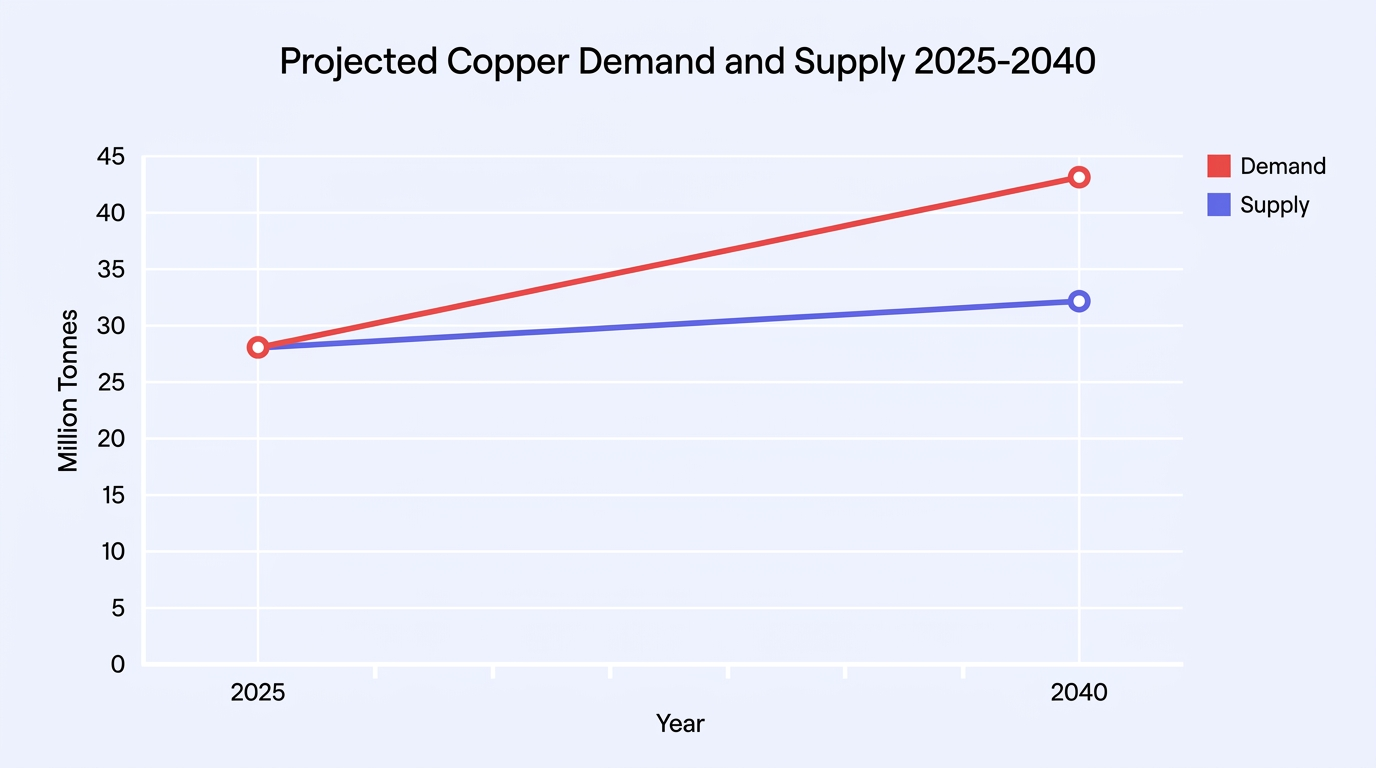
Copper's Structural Deficit: Why the 'New Oil' May Constrain the Energy Transition.
Copper SupplyEnergy TransitionMining ChallengesPolicy MeasuresRenewable Energycopper price forecast 2026
This report investigates the role of copper as a critical component in the global shift towards electrification and clean energy. Dubbed the 'new oil,' copper is essential for renewable energy systems and digital infrastructure, but its supply faces significant challenges. Long project timelines, declining ore grades, and geographic concentration contribute to a structural deficit. The report emphasizes the need for strategic investments and policy measures to ensure copper's availability aligns with global decarbonization goals.
Subhash Kumar Golla, Ghost Research
March 2026
Perspective.
PurposeTo explore copper's critical role and constraints in supporting global energy transition and digital infrastructure.
AudiencePolicy makers, industry leaders in energy, mining, and technology sectors, and investors.
Special EmphasisSustainability, decarbonization, policy, innovation.

96Pages of Deep Analysis
123Curated Credible Sources
18Proprietary AI Visuals
19Data Analysis Tables
$495

Subhash Kumar Golla
11+ Years of Experience
Sectors & Industries
Consumer StaplesHealthCare
Functions & Expertise
Market IntelligenceOperations
Have questions? Our Research Desk is here to help
Top Insights.
Copper demand will rise significantly due to electrification and AI.The supply deficit is exacerbated by long mine development timelines.Copper markets face geopolitical risks from concentrated production regions.Recycling and policy measures are crucial to mitigate supply gaps.Investments in copper supply chains must align with sustainability goals.Key Questions Answered.
96Pages of Deep Analysis
18Proprietary AI Visuals
123Curated Credible Sources
19Data Analysis Tables
Summary.