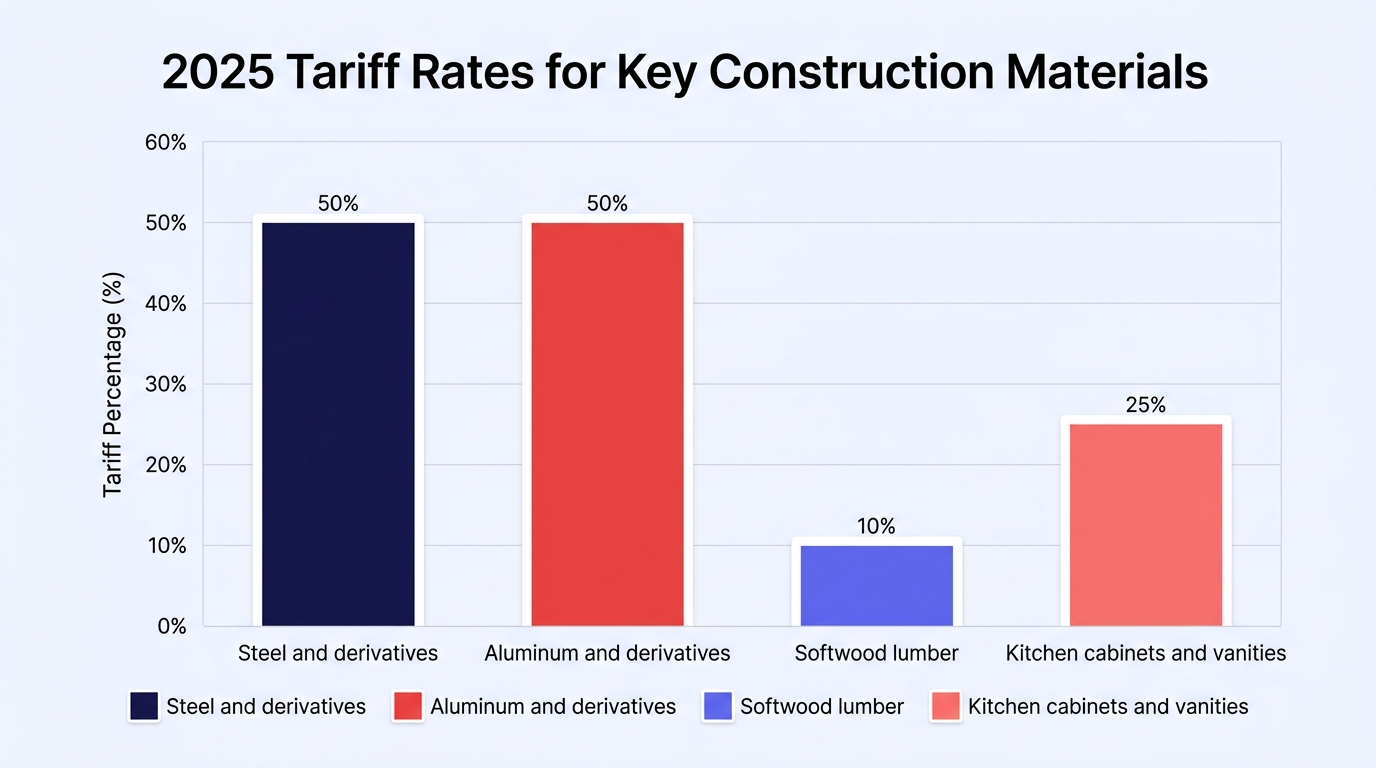
Construction Tariff Squeeze: Why Building Materials Face 10-15% More Exposure Than Other Sectors.
Construction TariffsFinancial Risk ManagementPolicy DevelopmentsSupply Chain VulnerabilityTariff Impact Analysisconstruction cost inflation
The report investigates the disproportionate tariff exposure of construction materials, which face 10-15% higher tariffs than other industrial sectors. It delves into the structural vulnerabilities of the sector due to its reliance on high-volume, low-margin inputs like steel, aluminum, and lumber. It explores the financial impacts, including cost overruns and project delays, and offers strategic recommendations for managing tariff risks. Additionally, the report examines policy developments and their implications for construction materials supply chains.
Gaurav Kumar, Ghost Research
March 2026
Perspective.
PurposeTo explore and explain the reasons behind higher tariff exposure for construction materials.
AudienceIndustry stakeholders, supply chain managers, and policymakers in the construction sector.
Special EmphasisTariff policy, supply chain vulnerability, financial impact analysis.
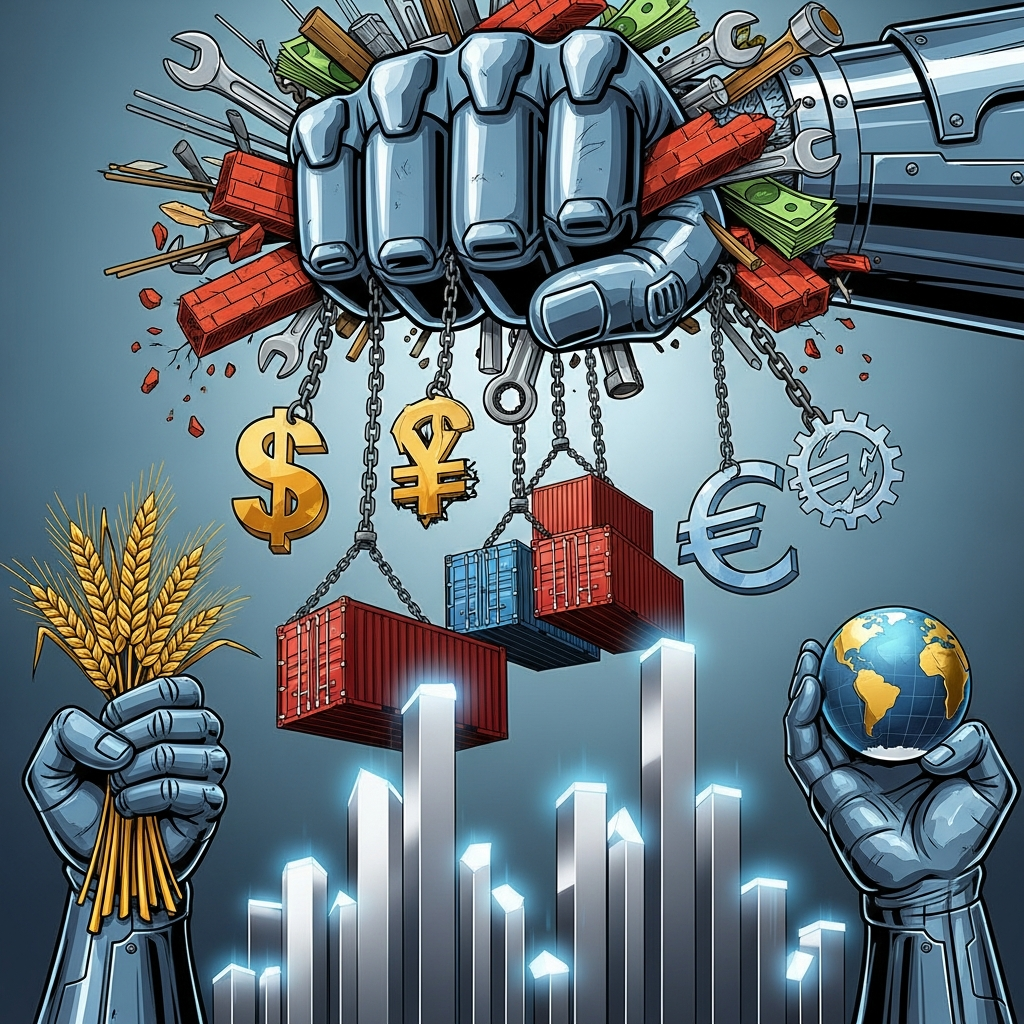
53Pages of Deep Analysis
50Curated Credible Sources
10Proprietary AI Visuals
10Data Analysis Tables
$495

Gaurav Kumar
2+ Years of Experience
Sectors & Industries
Information Technology
Functions & Expertise
Data & AIStrategy & GTM
Have questions? Our Research Desk is here to help
Top Insights.
Construction materials face higher tariffs due to dependency on upstream commodities.Tariffs have significant financial impacts, causing cost overruns and project delays.Strategic responses include dual sourcing and tariff responsive commercial terms.Section 232 tariffs are central to construction input increases.Policy developments continue to impact construction more than other industries.Key Questions Answered.
53Pages of Deep Analysis
10Proprietary AI Visuals
50Curated Credible Sources
10Data Analysis Tables
Summary.