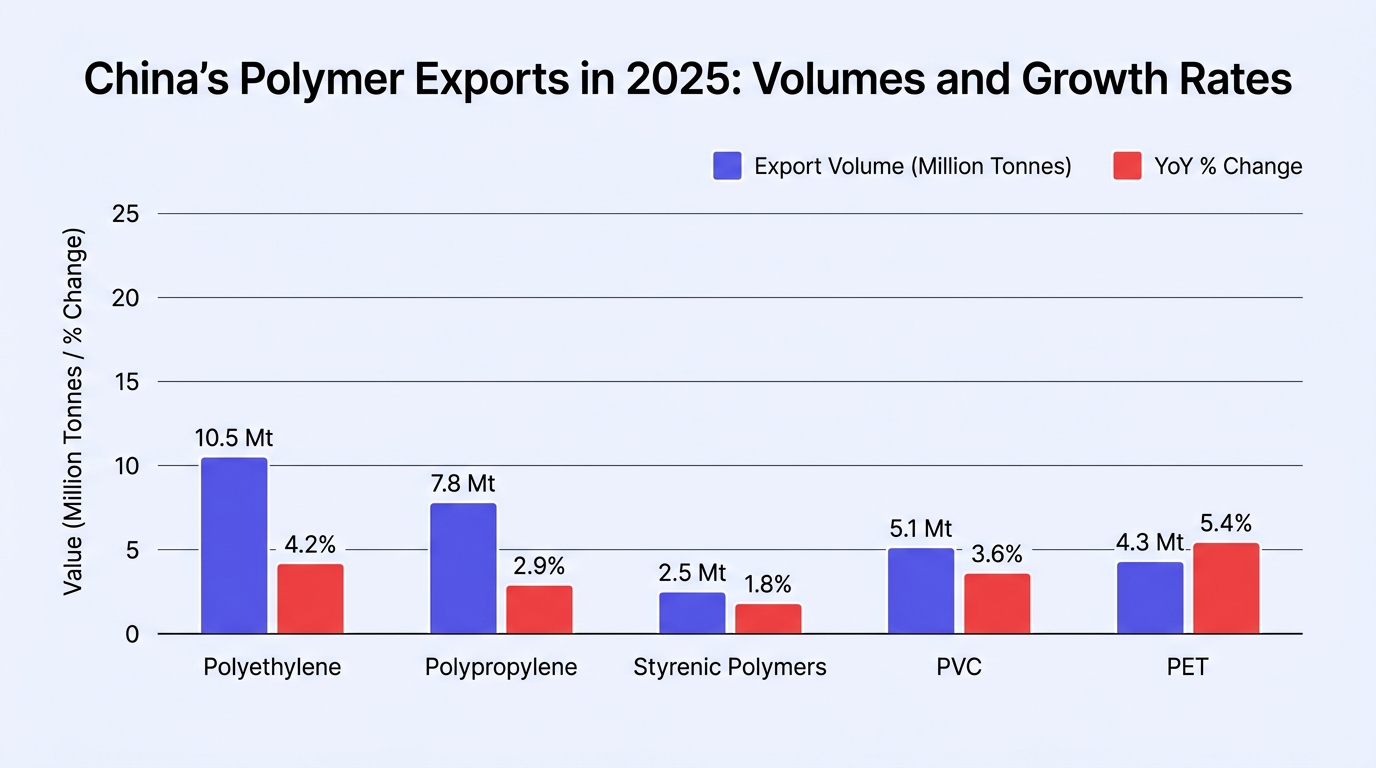
China's Industrial Overcapacity: Global Price Pressure on Steel, Chemicals, and Polymers.
ChemicalsChina OvercapacityDumping RiskPolymersPrice PressureSteel Exports
The report examines China's industrial overcapacity in 2025, focusing on its impact on global pricing, trade dynamics, and industrial sectors such as steel, chemicals, and polymers. It explores the ripple effects of excessive capacity leading to global disinflation and trade tensions. The study discusses how export strategies, trade defenses, and domestic policy measures influence market conditions. Additionally, it delves into the implications for corporate strategies, supply chain adaptations, and future outlooks for sectoral transitions.
Haajer Khan, Ghost Research
February 2026
Perspective.
PurposeTo analyze China's industrial overcapacity and its global economic impact, particularly on pricing pressures and trade responses.
AudienceEconomists, policy makers, industry stakeholders, and investors.
Special EmphasisOvercapacity, trade policy, economic impact.

78Pages of Deep Analysis
75Curated Credible Sources
16Proprietary AI Visuals
15Data Analysis Tables
$495

Haajer Khan
5+ Years of Experience
Sectors & Industries
EnergyFinancials
Functions & Expertise
Finance & InvestmentRisk & ESG
Have questions? Our Research Desk is here to help
Top Insights.
China's overcapacity leads to global disinflation pressure.Trade defenses increase but do not fully offset price impacts.Corporations are adapting supply chains in response to overcapacity.China's EV sector is a major contributor to export pricing pressures.Supply-side reforms in China aim to balance market conditions.Key Questions Answered.
78Pages of Deep Analysis
16Proprietary AI Visuals
75Curated Credible Sources
15Data Analysis Tables
Summary.