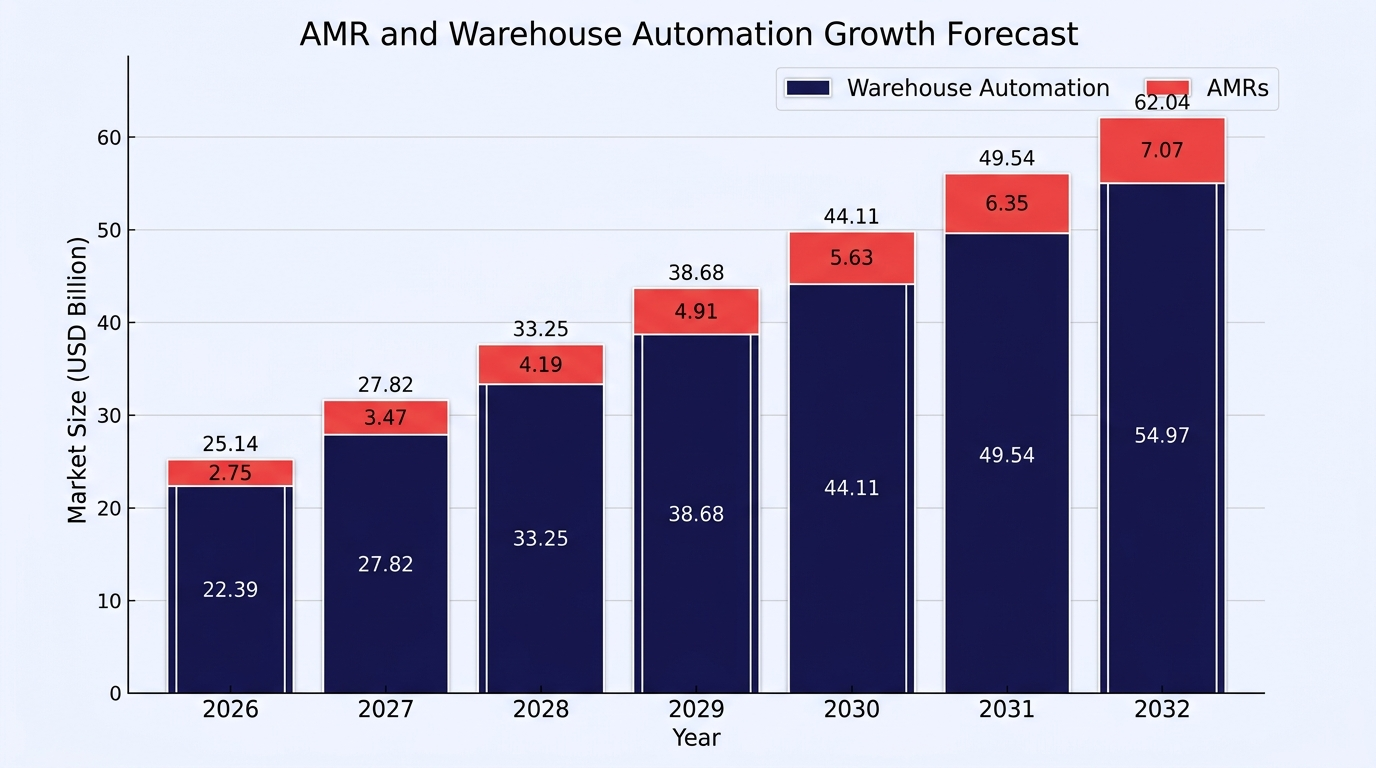
This comprehensive report explores the integration of autonomous logistics in manufacturing, detailing both opportunities and challenges. The report highlights how automation technologies such as AMRs and AGVs are transforming intralogistics by enhancing scalability and efficiency. It examines the global adoption patterns, regulatory frameworks, and technological advancements shaping the sector from 2026 to 2032. The report also covers potential risks, cost-benefit analyses, and strategic recommendations for successful implementation.
Special EmphasisEmphasis on innovation, cost efficiency, and regulatory compliance.

Report Layout.
Market Overview (Global)
Market size and growth trajectory
Regional adoption patterns
Segmentation by technology
Forecasts through 2032
Market Penetration and Adoption Trends
Adoption rates by industry
Get the Insights You Need — Download Now.
Insights.
Autonomous logistics in manufacturing is shifting to software-led operations.AMRs and AGVs are central to reducing intralogistics costs.Regulatory frameworks are expanding, impacting global adoption.Operational resilience is critical to successful automation deployment.Strategic partnerships are key to advancing autonomous logistics technology.
Key Questions Answered.
GHOST Research combines the power of Traditional Research & LLMs.
-Sources of Curated Credible Data
28+Major Business Languages
FractionCost of traditional Research
Live StreamOf information for latest insights
Powered byProprietary AI Research Engine generates deeper insights than traditional Market Research
1000+ Subject matter expertsIndustry leading Research Experts across topics, sectors & geographies publish insightful reports
Regional deployment differences
Technology adoption roadmap
Key barriers and accelerators
Technology Stack Breakdown
Autonomous Mobile Robots (AMRs)
Automated Guided Vehicles (AGVs) vs AMRs
Autonomous trucking
Drone and micro-delivery robot applications
Integration with Existing Manufacturing Systems
ERP, WMS, MES integration
Digital twin command hubs
Data architecture
Legacy system compatibility
Cost-Benefit Analysis Framework
Implementation cost structures
ROI timelines
Labor augmentation
Energy and sustainability optimization
Operational Fragility & Risk Analysis
Vulnerability assessment methodology
Cybersecurity and AI system threat landscape
Interoperability challenges
Risk heatmap
Operational Vulnerability Assessment
Single points of failure
Resilience testing
Redundancy strategies
Business continuity planning
Regulatory and Compliance Landscape
Regional regulatory frameworks
Safety standards and certification
Liability and insurance implications
Emerging trends
Competitive Landscape
Leading technology providers
Comparative capability assessment
Strategic partnerships
Investment trends
Implementation Case Studies
Hyundai’s AI-centric Metaplant
Aurora’s driverless trucking network
Gatik’s autonomous operations
Warehouse orchestration and R2G deployments
Scenario Modeling
Best-case scenario
Worst-case scenario
Middle-path scenario
Decision support framework
Financial Modeling Section
Capital expenditure projections
Operational expenditure impacts
Payback period modeling
NPV and sensitivity analysis
Investment Analysis
Investment trends
Valuation approaches
Expected returns
Risk-adjusted investment frameworks
Future Outlook and Emerging Trends
Agentic AI, Industry 5.0/6.0, swarm robotics
Convergence with smart manufacturing
Disruptive models
Five-year forecast
Strategic Recommendations
Executive-level strategic imperatives
Technology adoption timelines
Implementation strategies
Critical success factors
References and Data Sources
Industry reports
Academic research
News and case studies
Quantitative data and expert interviews
2
Which technologies are central to the report's analysis?