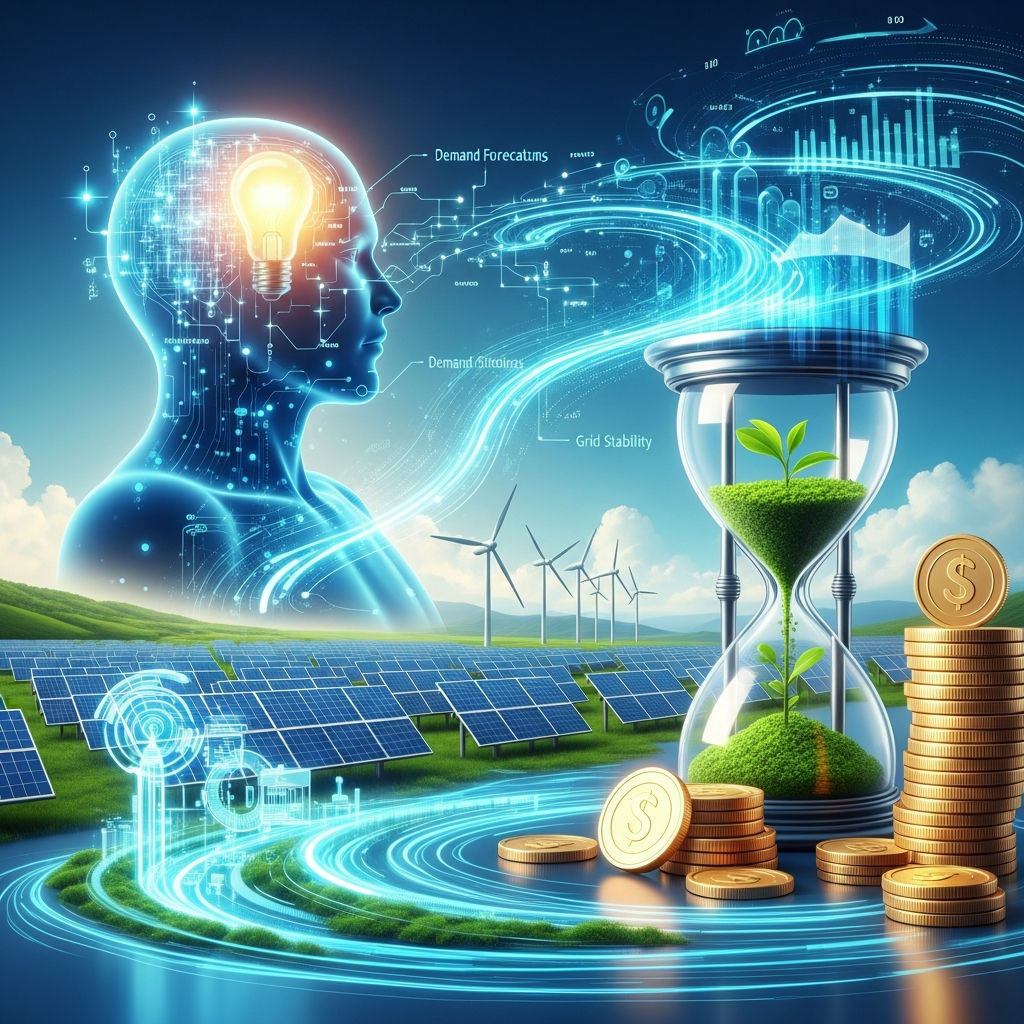
AI in Energy Forecasting Demand Grid Stability and Pricing.
AI Energy ForecastingEnergy AnalyticsFuture of UtilitiesGrid StabilityPower Pricing
This report explores AI's transformative role in the energy sector, focusing on demand forecasting, grid stability, and pricing strategies. It examines how AI enhances forecasting accuracy, helping to manage energy consumption and market dynamics. The document provides insights into the integration of AI in renewable energy forecasting, including challenges like intermittency and variability. Additionally, it outlines the regulatory and policy frameworks influencing AI deployment, while highlighting regional trends in AI adoption within energy systems.
Parvez Momin, Ghost Research
February 2026
Perspective.
PurposeThe primary objective is to analyze AI's impact on energy forecasting, emphasizing demand forecasting, grid stability, and pricing strategies.
AudienceThe report is intended for energy sector professionals, policy makers, and technology providers.
Special EmphasisThere is a special emphasis on innovation in AI, sustainability, and policy frameworks.
157Pages of Deep Analysis
154Curated Credible Sources
42Proprietary AI Visuals
48Data Analysis Tables
$495

Parvez Momin
18+ Years of Experience
Sectors & Industries
IndustrialsConsumer StaplesEnergy
Functions & Expertise
Strategy & GTMMarket Intelligence
Have questions? Our Research Desk is here to help
Top Insights.
AI enhances energy forecasting accuracy significantly.AI integration helps manage grid stability and pricing.Challenges like data quality and model validation need addressing.Regional adoption varies, influenced by local regulations.AI drives better renewable energy management through probabilistic forecasting.Key Questions Answered.
157Pages of Deep Analysis
42Proprietary AI Visuals
154Curated Credible Sources
48Data Analysis Tables
Summary.