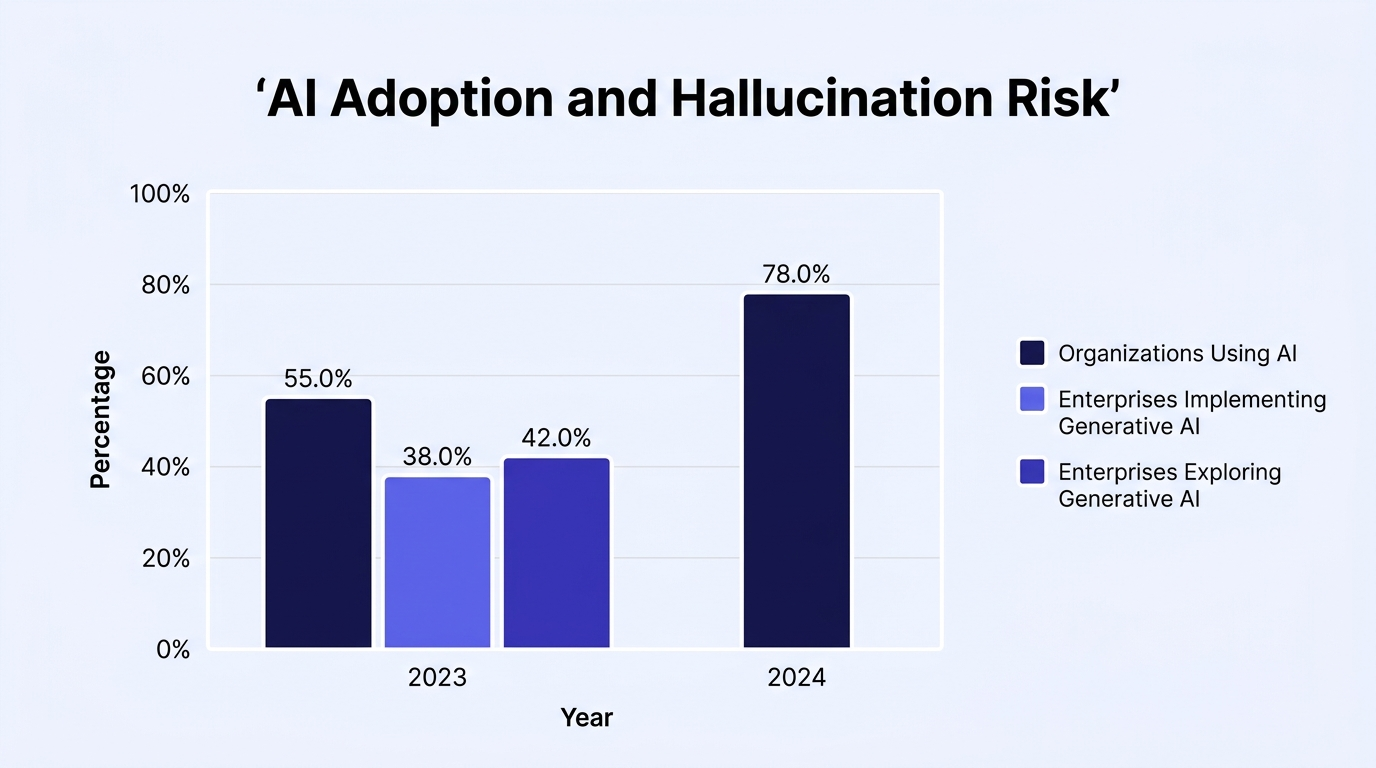
AI Hallucination Risk in Enterprise Systems.
AI HallucinationsDecision IntelligenceEnterprise GovernanceRegulatory ComplianceResponsible AIRisk ManagementTechnology Sector
This comprehensive report examines the risks posed by AI hallucinations in enterprise systems, focusing on governance, liability, and decision-making impacts. It targets IT leaders such as CIOs, CTOs, and CDOs globally, analyzing factors like model limitations and training data biases. The report includes real-world case studies, governance frameworks, and risk management strategies. Additionally, it provides sector-specific insights across industries like finance, healthcare, and manufacturing, and emphasizes the importance of regulatory compliance, especially concerning the EU AI Act.
Pinky Chouriya, Ghost Research
February 2026
Perspective.
PurposeTo analyze and address the risks of AI hallucinations in enterprise systems through governance, liability, and risk management strategies.
AudienceCIOs, CTOs, CDOs, and IT leaders in the technology sector.
Special EmphasisGovernance frameworks, regulatory compliance, risk management

87Pages of Deep Analysis
86Curated Credible Sources
5Proprietary AI Visuals
9Data Analysis Tables
$495

Pinky Chouriya
2+ Years of Experience
Sectors & Industries
Information Technology
Functions & Expertise
Data & AITechnology & Cybersecurity
Have questions? Our Research Desk is here to help
Top Insights.
AI hallucinations can lead to significant operational and financial risks for enterprises.Effective governance frameworks are crucial in managing AI hallucination risks.Regulatory compliance, particularly the EU AI Act, requires enterprises to adopt traceability and transparency measures.Real-world examples highlight the consequences of AI hallucinations in various sectors.Proactive risk management strategies are necessary to mitigate the impact of AI-generated errors.Key Questions Answered.
87Pages of Deep Analysis
5Proprietary AI Visuals
86Curated Credible Sources
9Data Analysis Tables
Summary.